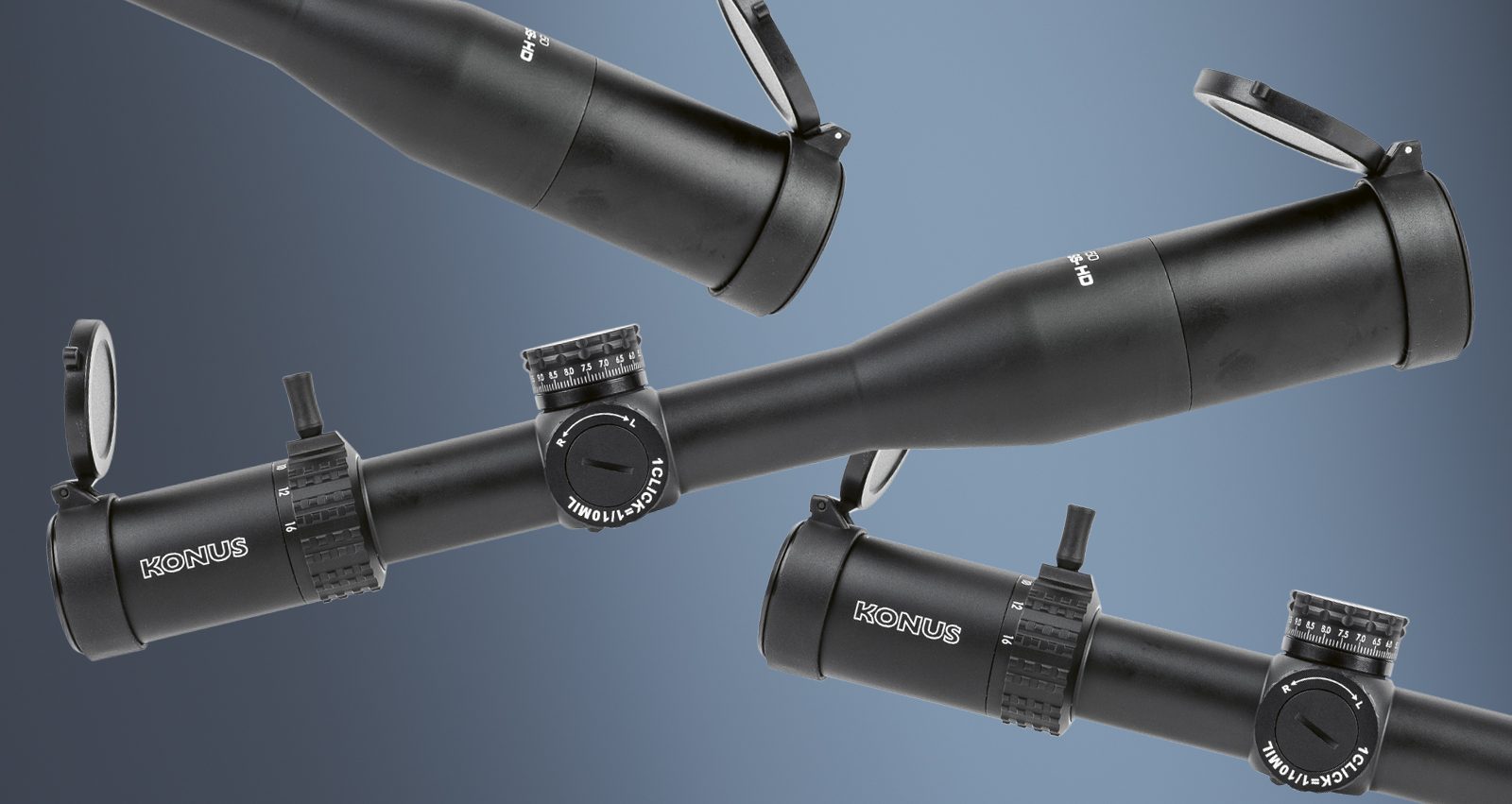
★ Competition – win a Vantage riflescope worth £279 – enter here! ★
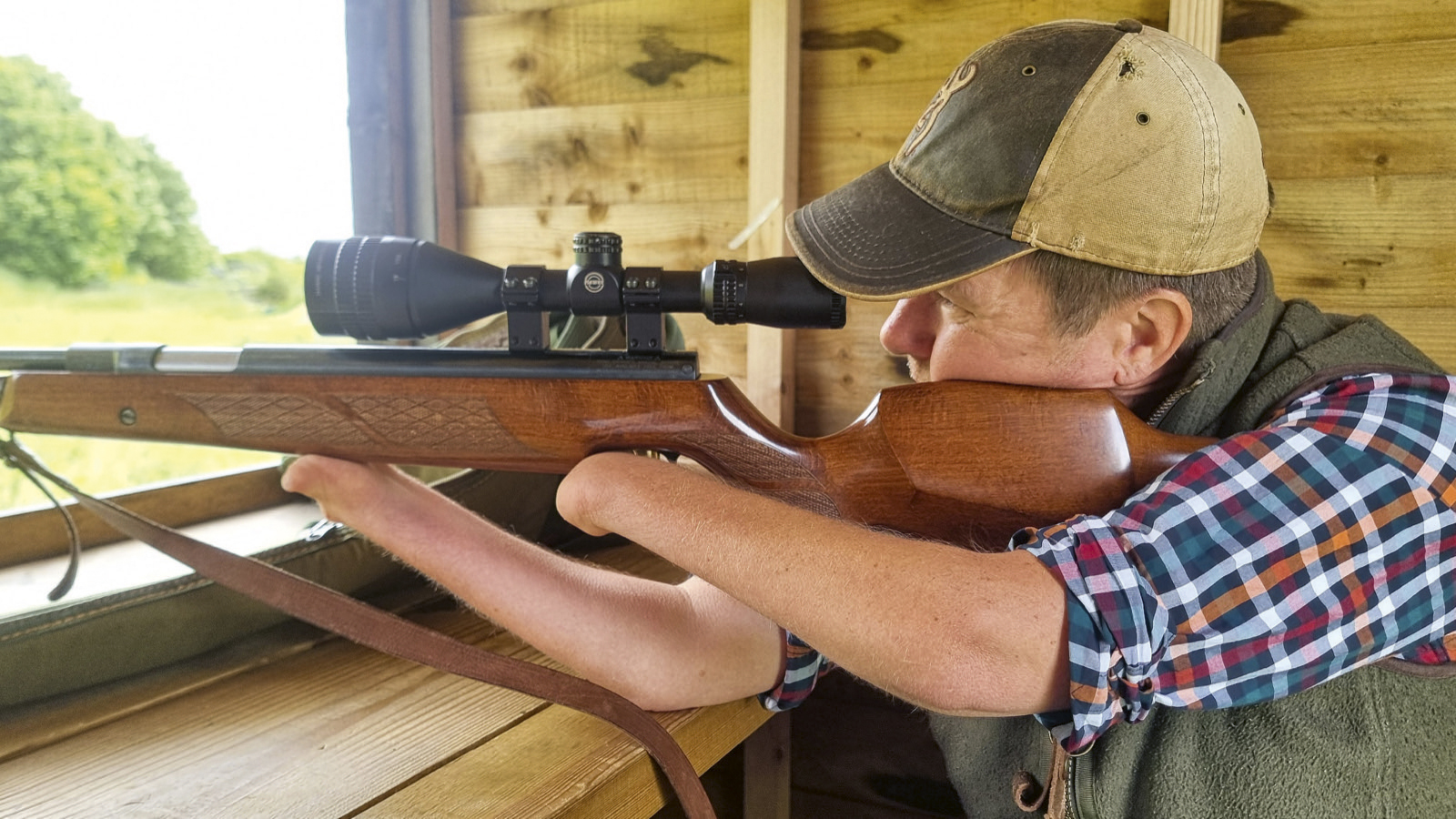

How to convert the Daystate Blackwolf from .177 to .22
Gary Chillingworth converts his Daystate Blackwolf from .177 to .22, walking through the mechanical swap step by step and the ballistic differences that change how the rifle is used in the field
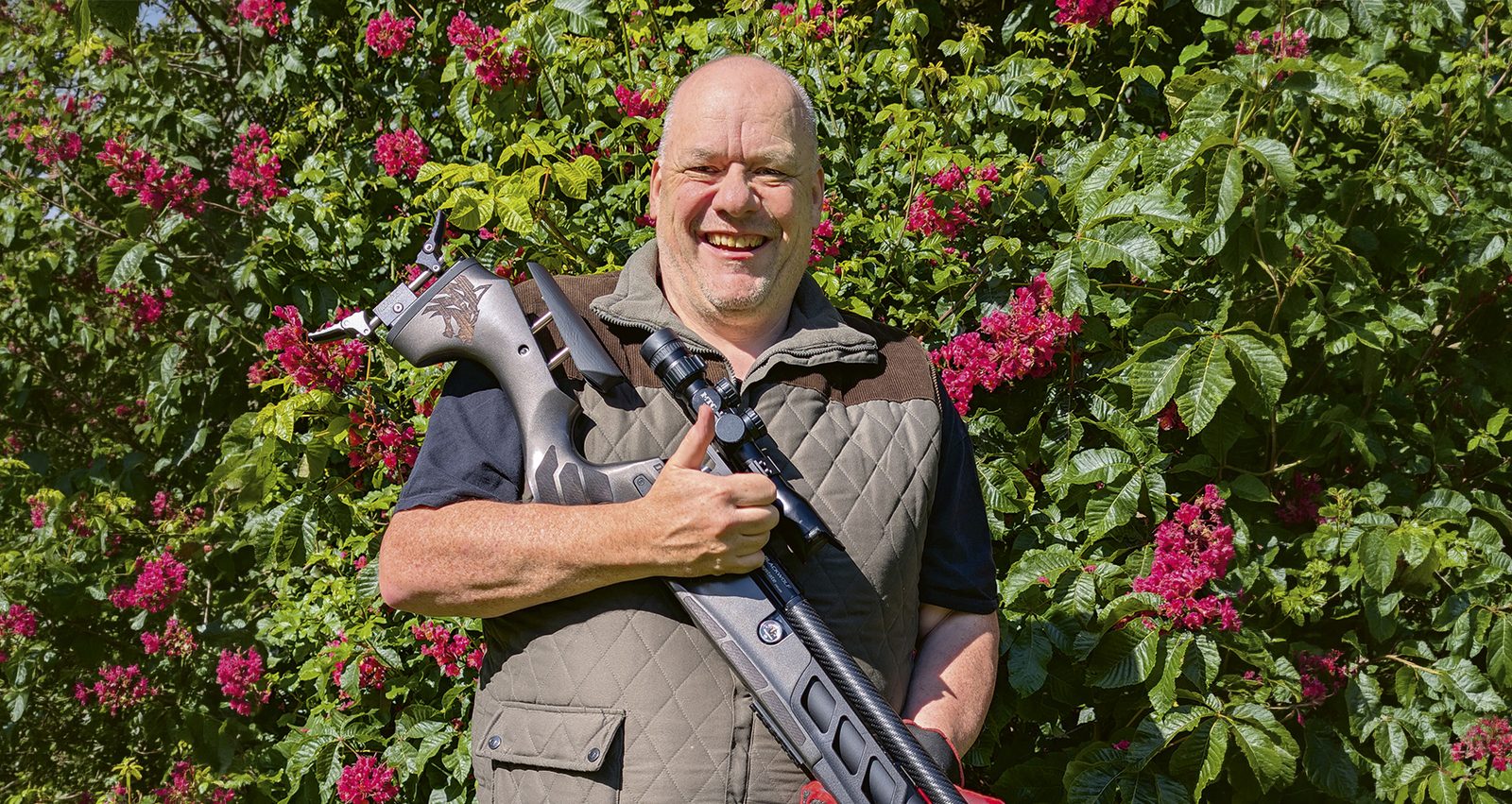

There are few modern air rifles that invite configuration changes quite as readily as the Daystate Blackwolf platform. It sits firmly in that category of rifle that feels less like a fixed tool and more like a system, adaptable to quarry, conditions and the shooter’s individual preference.
Changing calibre from .177 to .22 is not a transformation of the rifle so much as a reconfiguration of its purpose. It alters trajectory, impact behaviour, shot count and ultimately the way the rifle is used in the field.
What follows is a practical, field-minded look at converting the Blackwolf between calibres, along with a grounded comparison of what genuinely changes when moving from .177 to .22.
Understanding the system before you start
The Blackwolf is designed as a modular platform. In practical terms, this means calibre changes are supported through the correct barrel kit and setup, rather than improvised adjustment. In essence, you install the appropriate components and the rifle is ready to be configured accordingly.
However, the point often overlooked is that a calibre change is not simply a barrel swap. It is a shift in how air is used, how pellets behave and how the rifle must be tuned. Treating it as a complete system change, rather than a quick mechanical alteration, is what separates a smooth transition from a frustrating one.
Before starting, ensure the rifle is unloaded and the safety is on. It does not need to be depressurised, and never fire the rifle without the barrel in position. Work in a clean, organised space. Small components matter here, and they have a habit of disappearing at exactly the wrong moment, so keep a small pot on hand or the gremlins will run off with a bolt or two.
The mechanical side: barrel and calibre conversion
At the centre of the conversion is the barrel. Moving from .177 to .22 requires a calibre-specific barrel and a matching pellet probe and magazine. If converting to FAC specification, a hammer spring change may also be required.
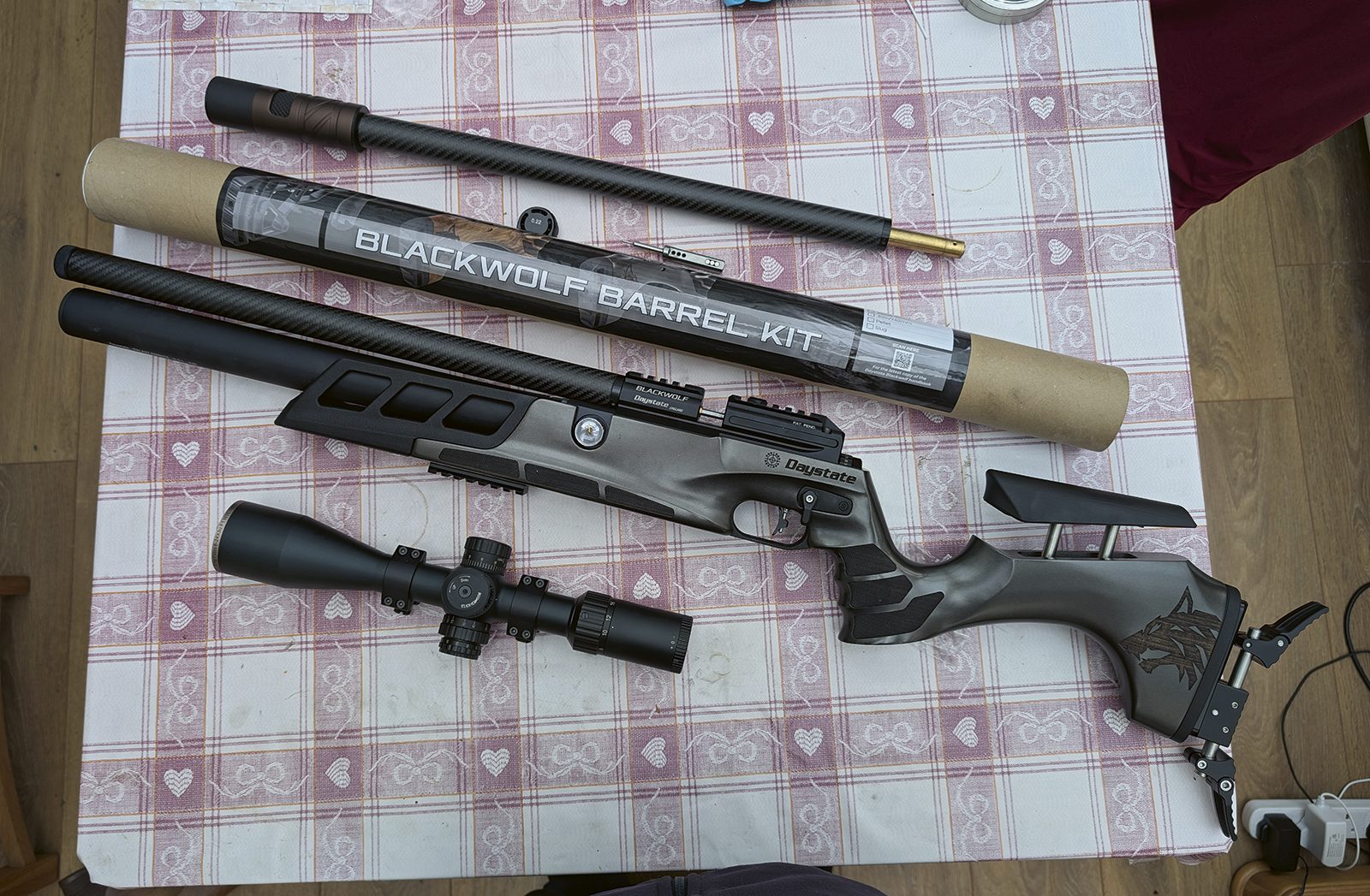
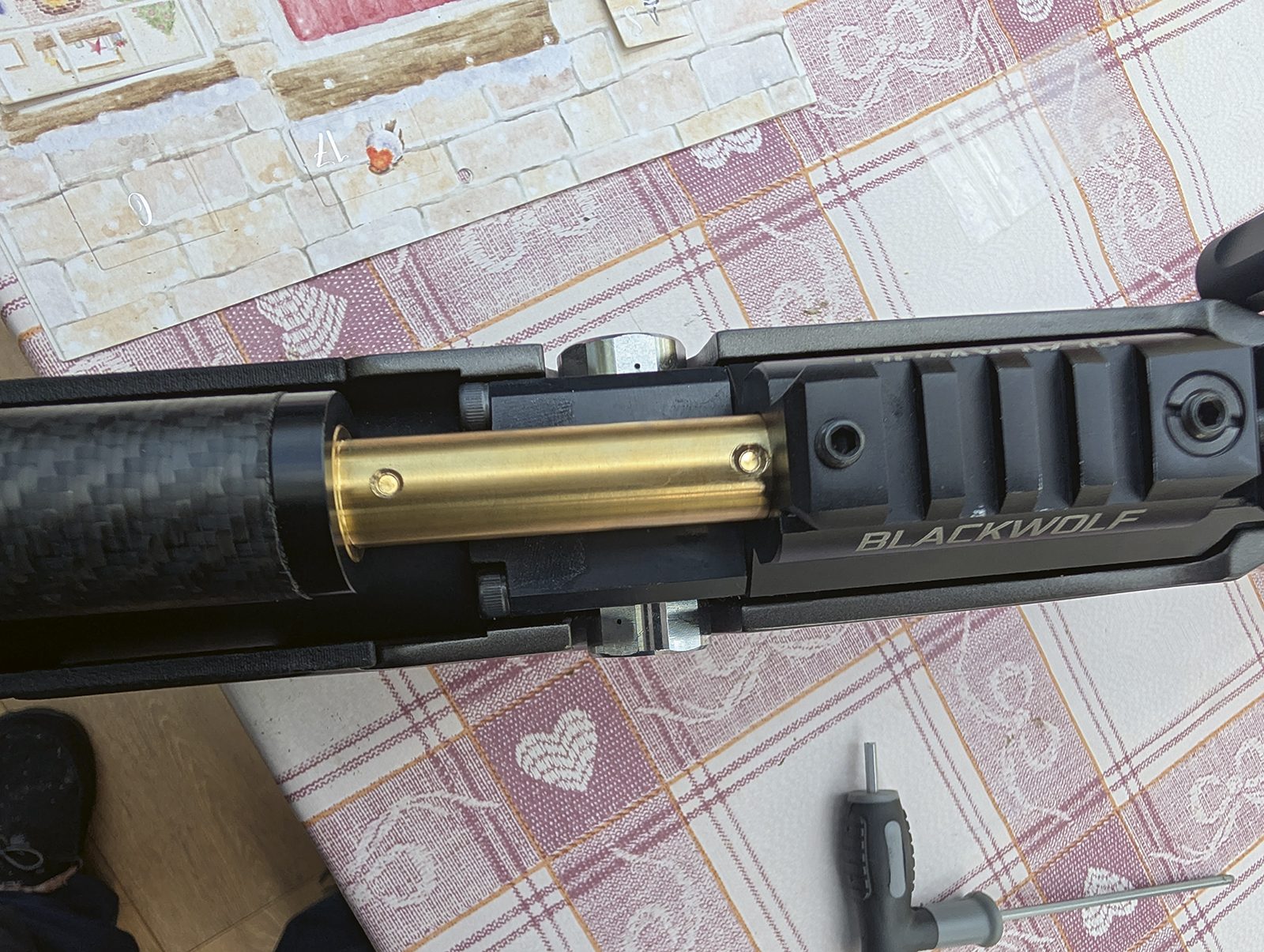
The process itself is methodical rather than complex.
Begin by making the rifle safe. Once confirmed, remove the scope to allow access. Two 3mm barrel retaining bolts, located within the Picatinny rail, are then loosened. The existing barrel can be withdrawn carefully, taking note of the indentations in the barrel collar, as these are the alignment and indexing features.
The pellet probe is the next step. Remove the 3mm bolt at the rear of the rail, then draw the cocking lever back slightly, without cocking the rifle, until a small gap becomes visible. Using a suitable tool such as a wooden dowel or chopstick, gently push the side plate free on the opposite side.
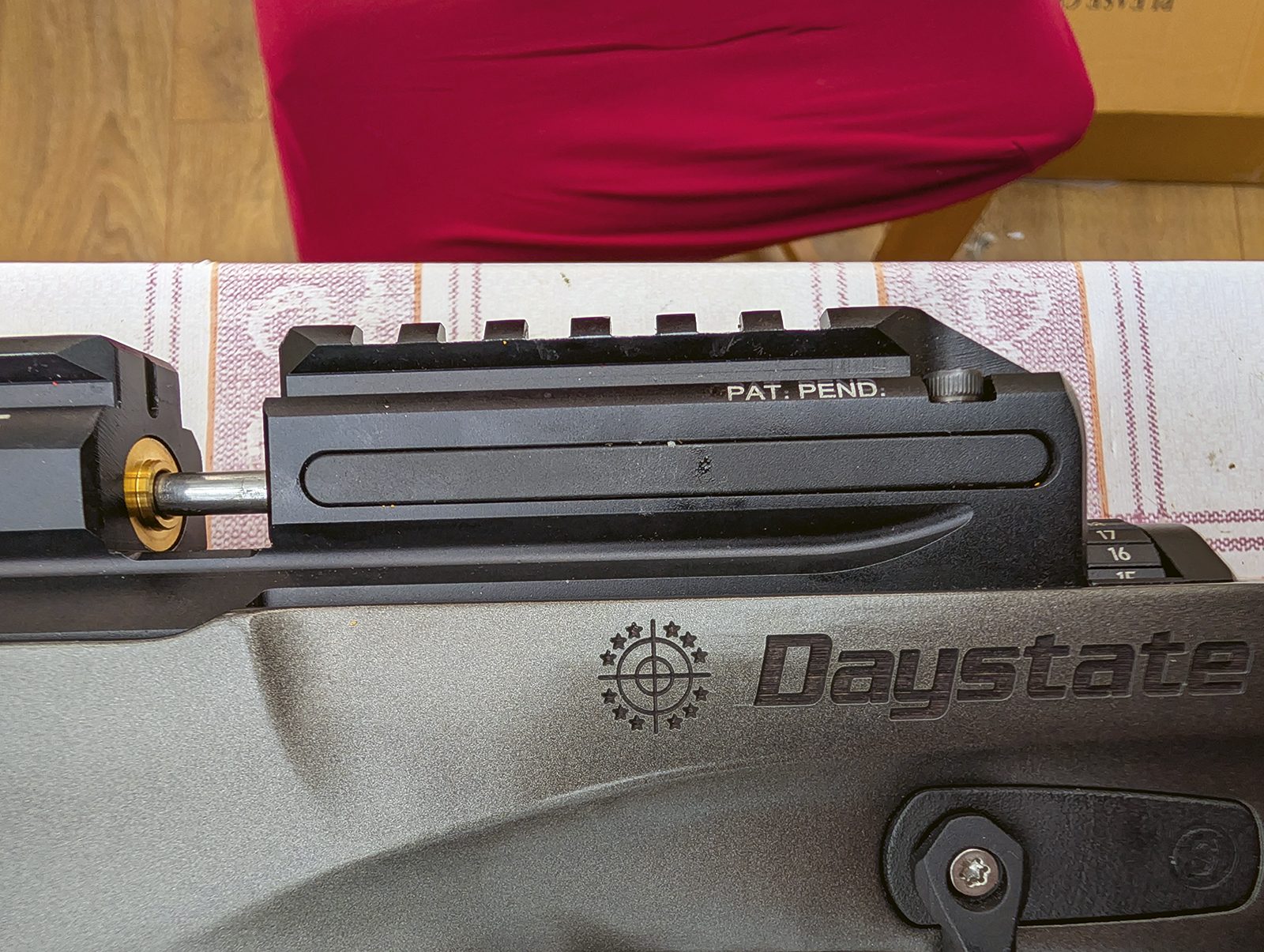
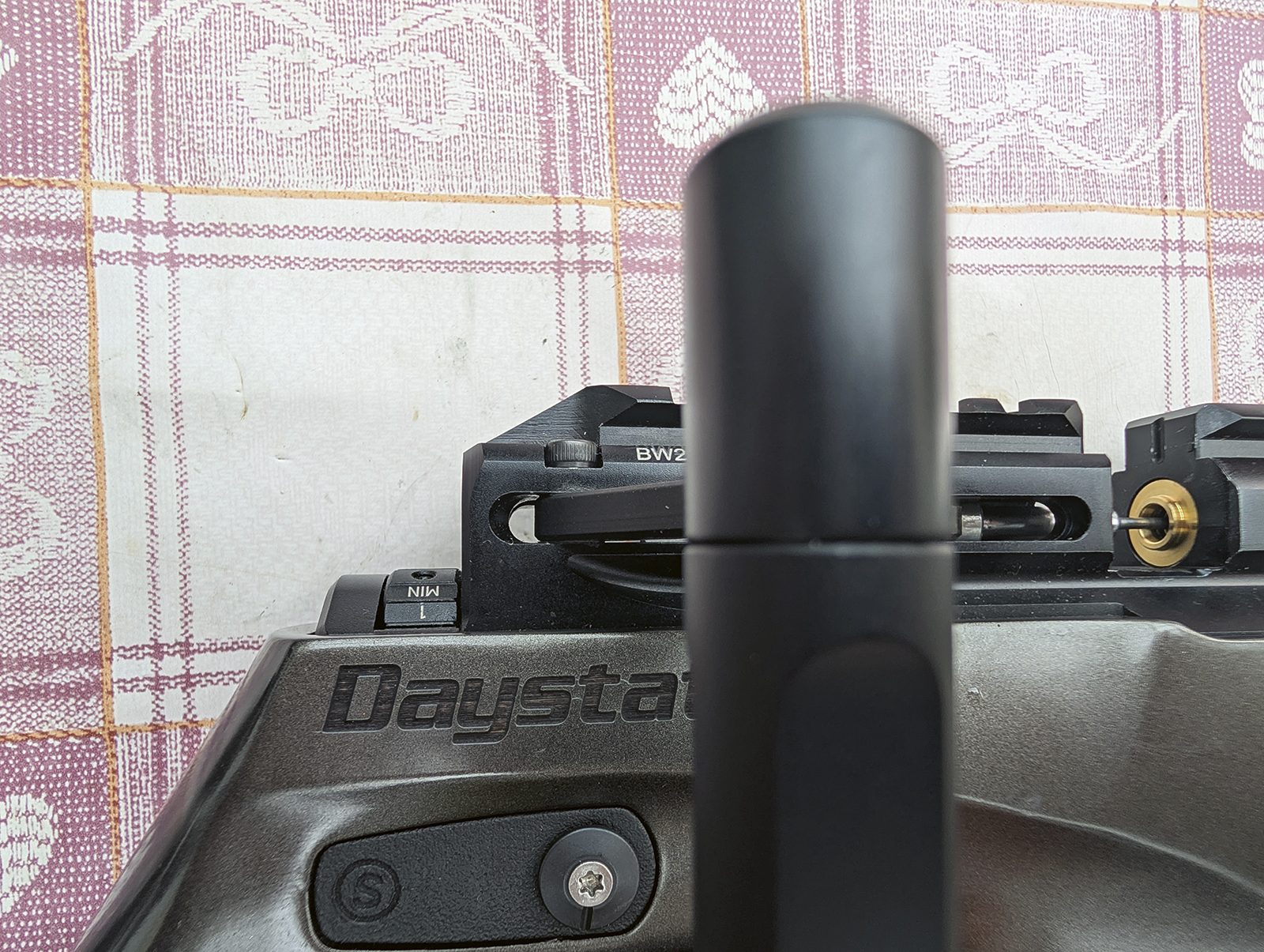
With the cover removed, a 2.5mm retaining screw becomes visible. This secures the pellet probe. Remove it, and the probe can be slid out through the barrel channel.
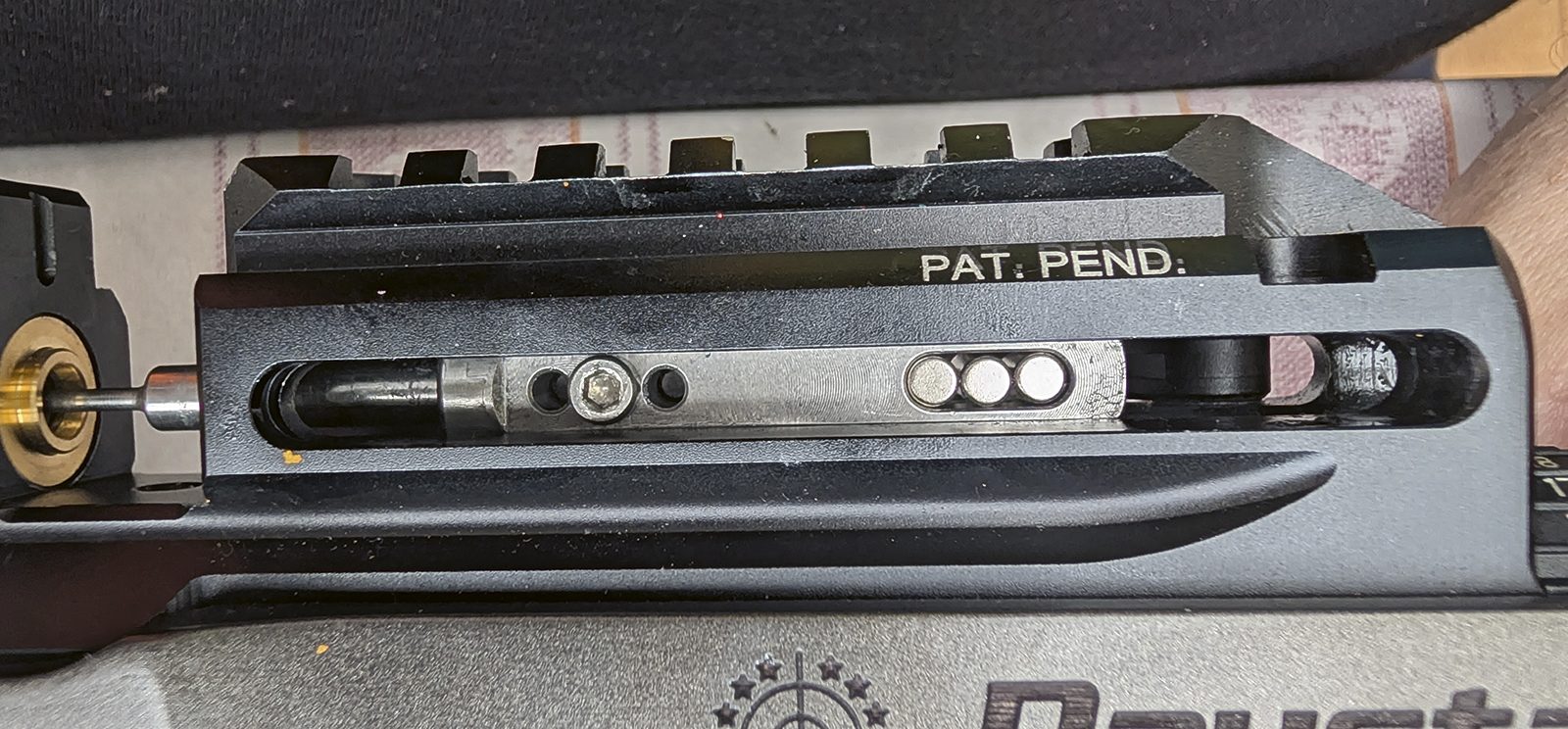
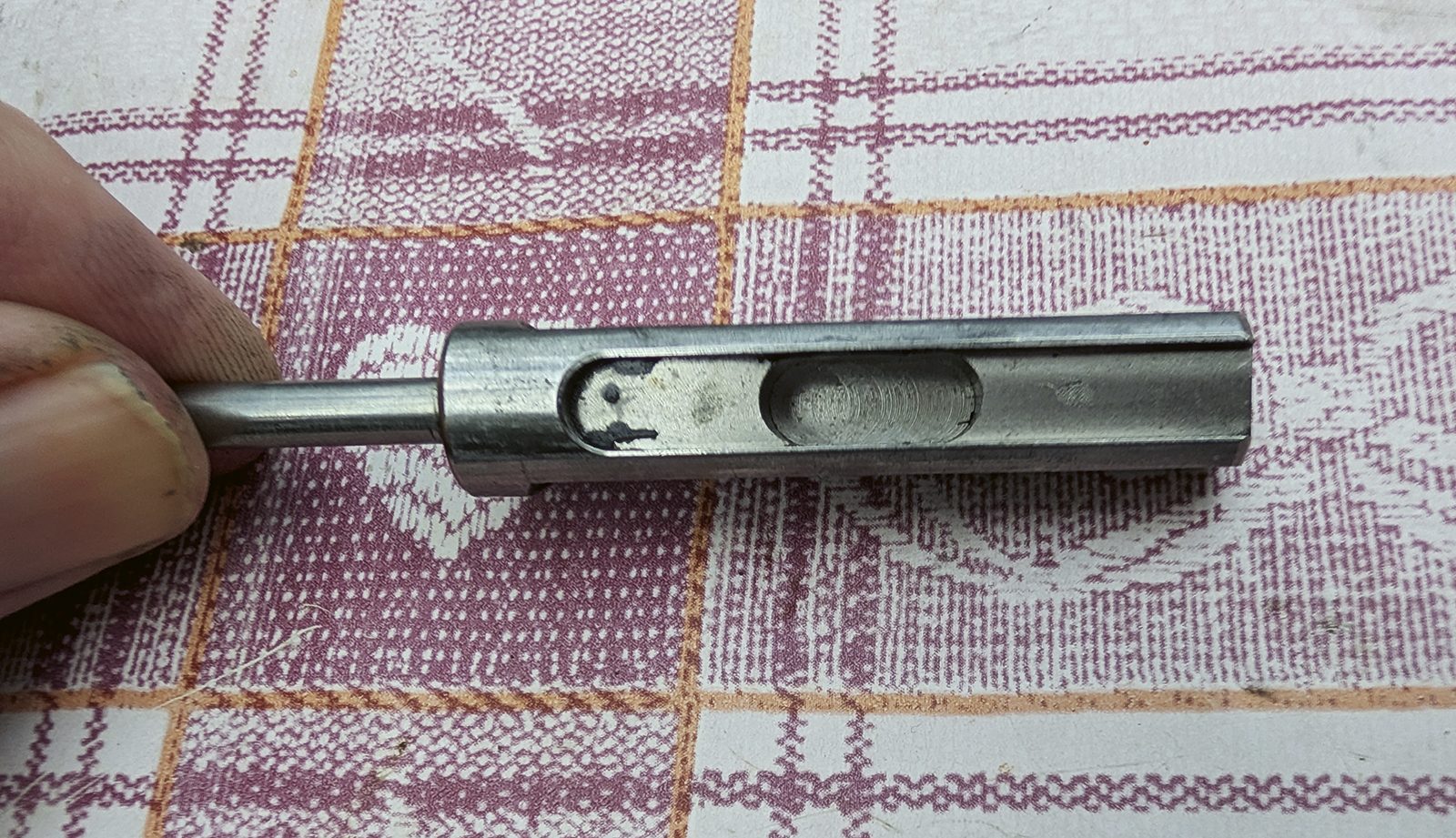
Installation is simply the reverse process. Fit the new probe, install the .22 barrel and reassemble carefully, ensuring correct alignment throughout. At this point, the mechanical conversion is complete.
However, if this sounds difficult, both Daystate and I have created step-by-step guides on YouTube to help.
Post-conversion checks and air-system behaviour
Once reassembled, the rifle should not be assumed ready for use simply because it is back together. The first consideration is air delivery. While modern regulated systems are highly consistent, a calibre change alters airflow demand. Contrary to common assumption, a .22 pellet typically requires less air per shot than a .177. This affects shot count, pressure curve behaviour and the perceived firing cycle.
The rifle should be checked over a chronograph to confirm it remains within legal limits. The system is designed to stay within power tolerances, but verification is always the responsible approach.
At this stage, accuracy is not the priority. The goal is simply to confirm consistent, predictable operation.
Zeroing after a calibre change
Zeroing is not an optional step: it is the point at which the rifle becomes usable again.
Switching from .177 to .22 significantly alters trajectory and point of impact. Even at modest ranges, the difference is immediately apparent.
Begin at a known distance. 25 yards is a sensible starting point for .22. Use a stable shooting platform and focus on grouping, not adjustment. Let the rifle show you where it is shooting before making corrections.
One of the more common mistakes is assuming the previous zero can be quickly dialled back in. In reality, you are now working with a fundamentally different ballistic profile.
Once a consistent group is established, make small, deliberate adjustments until point of aim and point of impact align. Patience here pays dividends later.
Pellet selection after conversion
A calibre change is, effectively, a reset in pellet choice.
A pellet that performed well in .177 offers no guarantee of similar performance in .22. Differences in weight, skirt design and head size become more pronounced as calibre increases.
Testing should be controlled and purposeful. Select a small range of quality pellets and evaluate them for consistency rather than outright speed or perceived impact. Tight, repeatable groups will always outperform raw velocity in practical field use.
.177 vs .22: practical differences in the field
The discussion around .177 and .22 is often simplified to “speed versus power”, but that does little to reflect real-world use.
Trajectory and range behaviour
The .177 typically offers a flatter trajectory. Its higher velocity and lighter weight result in less visible drop, making range estimation more forgiving.
The .22 introduces a more pronounced arc. It demands greater awareness of distance but tends to deliver a more settled and decisive impact at typical hunting ranges.
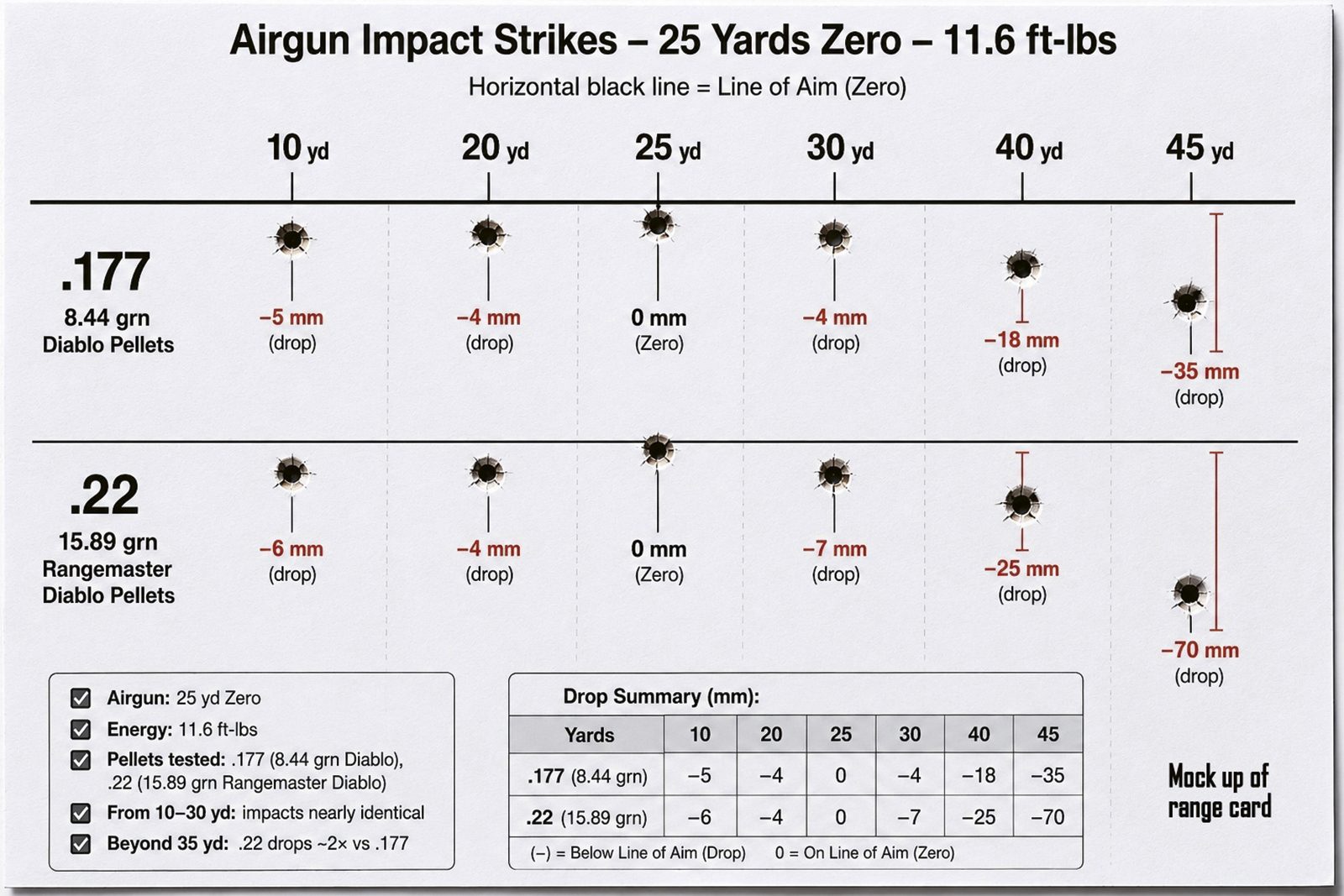
In testing, with a 25-yard zero, the aim points of a .177 and a .22 are very similar from 10 to 30 yards, but beyond 35 yards things change. The .22’s drop increases sharply over that range. At 45 yards, for instance, there was a 70mm difference in drop between the two calibres.
Wind sensitivity
Wind is where the distinction becomes particularly clear.
The .177, being lighter, gets to the target faster. The .22, with greater mass, generally holds its line more effectively. It is not immune to wind drift, but it often requires less correction under moderate conditions.
For field shooting, this can be a deciding factor depending on terrain and exposure.
Shot count and air usage
Moving to .22 will usually increase total shot count per fill. This is something I still find counter-intuitive: you would assume a heavier pellet needs more air to move it at the same power, yet the .22 uses less.
Final thoughts
Treat the whole exercise as two setups, not one rifle. The most common mistake when converting between .177 and .22 is assuming it remains the same rifle with a minor adjustment.
In reality, you are configuring two distinct systems within a single platform.
The Blackwolf makes the transition straightforward, but each calibre demands to be treated independently: its own zero, its own pellet choice, and its own expectations.
Approached properly, the benefit is considerable. One rifle can fulfil two very different roles: flat-shooting precision in .177, and a more measured, stable field performance in .22.
And, as with all air rifles, consistency is not something set once and forgotten. It is something that should be maintained, quietly and deliberately, every time the rifle is picked up.
Frequently Asked Questions
Do you need a special barrel to change a Daystate Blackwolf’s calibre?
Yes. The Blackwolf is a modular platform, so a calibre change is done with the correct calibre-specific barrel kit, which includes a matching pellet probe and magazine, rather than by improvised adjustment. If you are converting to FAC specification, a hammer spring change may also be needed.
Does a .22 use more air than a .177 in the Blackwolf?
No. Contrary to common assumption, a .22 pellet typically requires less air per shot than a .177, which usually increases the total shot count per fill. It also changes the pressure curve and the perceived firing cycle.
Do you need to re-zero after changing calibre?
Yes. Zeroing is essential, as switching from .177 to .22 significantly alters trajectory and point of impact. Start at 25 yards, focus on grouping before adjusting, and do not expect the old zero to simply dial back in, because you are working with a different ballistic profile.
Can you use the same pellets after converting from .177 to .22?
Treat it as a fresh start. A pellet that performed well in .177 offers no guarantee of similar performance in .22, because weight, skirt design and head size matter more as calibre increases. Test a small range of quality pellets and choose on consistency rather than raw speed.
Is .177 or .22 better in the wind?
The .177 is lighter and reaches the target faster, while the heavier .22 generally holds its line more effectively and often needs less correction in moderate wind. Neither is immune to drift, so terrain and exposure should guide the choice for field shooting.
Related Articles
Air rifles
Air rifles and pistols
Features, interviews and advice
Seven reasons springers are better than PCPs
After a year of letting PCPs back into his gun cabinet, Jamie Chandler still finds himself drawn to the honest thump of a spring-piston rifle. Here is his case for why your first or next air rifle sho...
By Jamie Chandler
Air rifles
Air rifles
Air rifles and pistols
AirMaks Arms Krait MKII review: bullpup PCP air rifle tested
Dave Barham tests the new AirMaks Arms Krait MKII, the latest bullpup PCP from the Czech maker, distributed in the UK by Hawke Optics and hand-tuned before it reaches the shops. Shot in .177 at his cl...
By Dave Barham
Get the latest news delivered direct to your door
Subscribe to Airgun World
Unlock the world of airgun hunting and target shooting with a subscription to Airgun World magazine, Britain’s biggest-selling airgun publication. Written by passionate, long-term airgun enthusiasts, each issue delivers expert insights, comprehensive gear reviews, and invaluable tips to enhance your shooting skills. Whether you’re a seasoned shot or new to the sport, Airgun World offers essential content covering shooting techniques, classic airguns, and the latest equipment innovations.
Save on shop price when you subscribe and pay just £4.60 per issue – 42% cheaper than buying in-store at £7.99!