★ Competition – win a Vantage riflescope worth £279 – enter here! ★

How to choose the right pellet for your airgun
Gary Wain cuts through the bewildering choice of airgun ammunition, explaining every pellet type, head size and the testing that finds the one your rifle shoots best

This guide was originally published in 2022 and fully revised in June 2026.
Choosing the right pellet is one of the single biggest factors in airgun accuracy, ranking alongside the rifle itself and the shooter behind it. Whether you are a seasoned Field Target competitor or a beginner who has just bought a first springer, the choice on the shelf is bewildering: dozens of brands, several head designs and a range of weights and sizes within every calibre. Get it right and groups tighten, quarry is dispatched cleanly and confidence grows. Get it wrong and even an expensive rifle will disappoint.
This guide walks you through the job from start to finish. It covers the main pellet types and what each is built to do, how head size and weight come into the picture, the step-by-step process for finding the pellet your own airgun prefers, and the variables that explain why two identical rifles can favour completely different tins. We will leave the heavy physics of coefficient of form, sectional density and ballistic coefficient to one side, and keep to what actually helps you choose.
What types of airgun pellet are there?
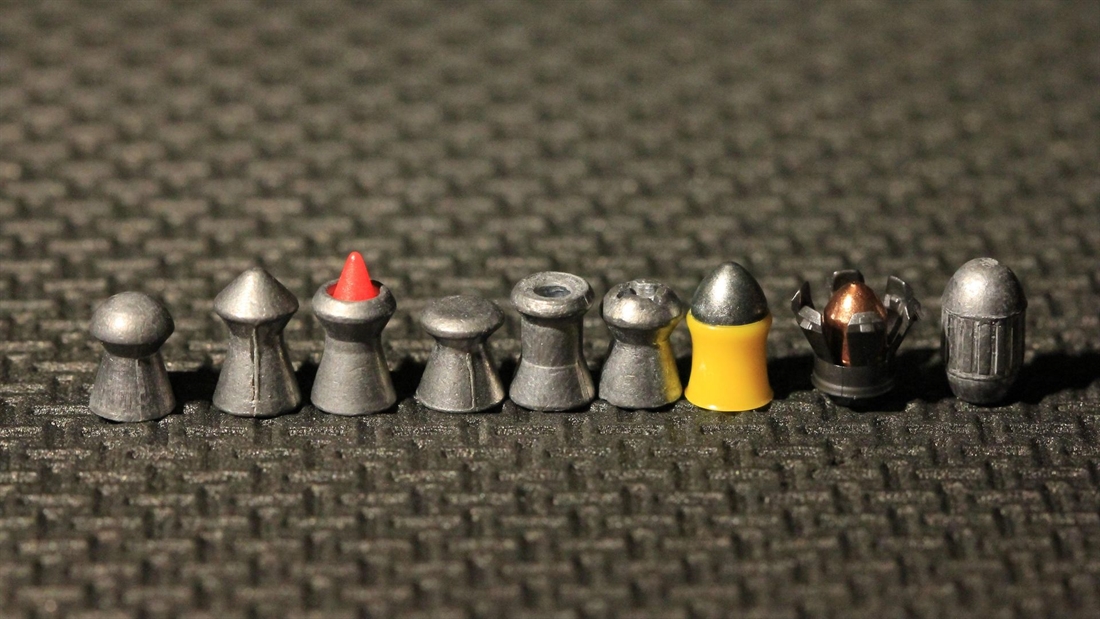
The fastest way to narrow the field is to match the pellet design to the job in hand, because each type is built around a different priority: accuracy, penetration, expansion or energy transfer. Below is a working guide to the main designs you will meet, including the strengths and weaknesses of each, and for a closer look at how each one performs it is worth reading our companion piece on the different types of pellet and what they are used for.
Domed pellets
Domed pellets are the most popular on the market, and with good reason. They are accurate across all practical ranges and offer reasonable, if not class-leading, ballistic results. Manufacturers spend the bulk of their research and development budgets on domed designs, and it shows in the consistency. They are the default choice for Field Target (FT) and Hunter Field Target (HFT) competitors, and the sensible starting point for hunting and general shooting too. The Air Arms Diabolo Field has long been a reliable performer, more recently rivalled by the QYS Streamlined Heavy, though with hundreds of brands available, the pellet that suits one rifle may not suit yours.
Pointed pellets (single piece)
Cast from a single piece of material, usually lead, pointed pellets are designed for superior penetration. In practice they are generally less accurate than domed pellets and some wadcutters, and they can over-penetrate, passing through the target without surrendering much energy. Some shooters value them on larger carrion, particularly where a shot intended for the head falls slightly low into the root-of-wing area. Be aware that the longer varieties may not fit rotary magazines.
Pointed pellets (two-piece)
Two-piece pointed pellets resemble the single-piece type but carry a pointed tip, often a metal alloy or plastic, designed to break away on impact and expose a cupped or hollow body in the main lead section. With a few notable exceptions they are about as accurate as single-piece pointed pellets, but deliver greater ballistic damage on impact. As with the single-piece type, some longer designs may not seat in rotary magazines.
Wadcutters
Flat-nosed, or wadcutter, pellets are primarily a match target design. Their flat front face punches a clean, crisp hole in a paper target, which makes scoring easy, and that same shape transfers a great deal of energy into live quarry at close range. The trade-off is range: their form makes them inaccurate much beyond 15m or so, so their stopping power is best reserved for short-range vermin control. The QYS training-grade wadcutters are a recent example worth a look for plinking and close work.
Hollow-point pellets
Hollow-point pellets are built to expand on impact, slowing quickly and dumping large amounts of energy into the target. They tend to deliver the most ballistic damage of any pellet type, which makes them popular for close-range hunting. Like wadcutters, their weakness is accuracy at distance, and quality varies widely between designs, so some are far more consistent than others.
Semi-hollow-point and modified domed pellets
These designs walk the line between the domed pellet and the hollow-point. Typically a domed profile is altered at the nose to encourage expansion on impact while keeping as much in-flight accuracy as possible. The JSB Hades is a well-known example. This is arguably the area with the most room for development: a pellet that expands like a hollow-point yet groups like a domed pellet would be the holy grail for hunters.
Non-lead pellets
With environmental pressure on lead growing, manufacturers are increasingly producing non-lead alternatives, which can take the form of any of the designs above. To date, performance has lagged behind lead, and few are yet worthy of serious consideration for accuracy-critical work. This is an area certain to improve as investment increases, so it is worth keeping an eye on rather than dismissing.
Sabots
A sabot is a carrier that holds a projectile smaller than the bore of the barrel. The sabot fills the full circumference of the barrel, then is discarded as the projectile leaves the muzzle, allowing the lighter projectile to travel at higher velocity. There has really only been one significant product in this category for airguns, the Sussex Sabo, and having shot them it is not hard to see why the format never caught on for mainstream use.
Slugs
The key difference between a slug and almost every other airgun projectile is that a slug has no skirt. Instead it resembles a .22 rimfire bullet, and the extra lead means it weighs considerably more, which is why slugs are favoured by those shooting FAC-rated airguns at longer ranges. They generally need a fast-twist barrel to stabilise correctly, so they are not a straight swap in every rifle. The Precision Ballistics Mako is the standout, and well worth trying, though it is not cheap.
How do I choose the right pellet size for my airgun?
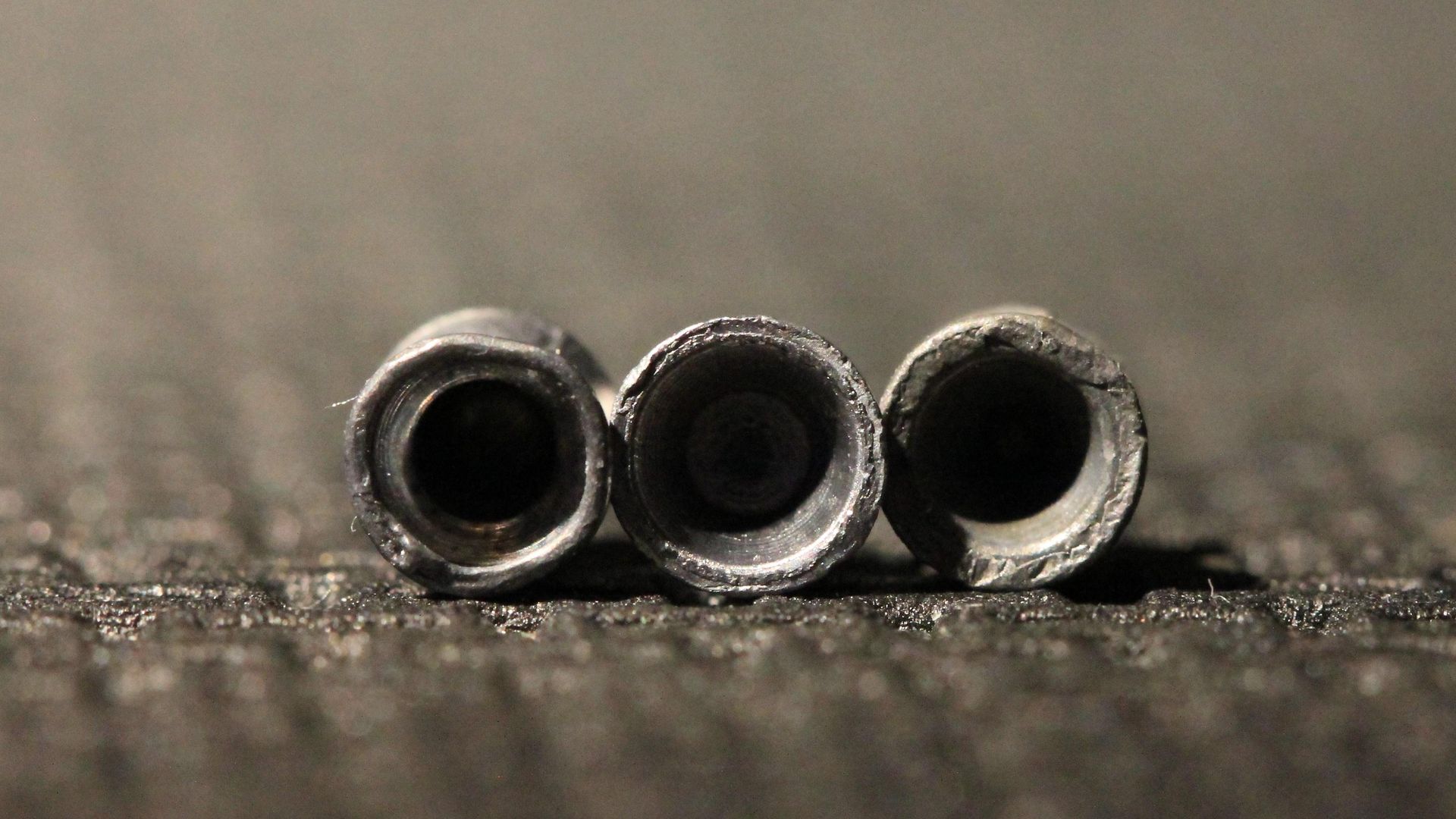
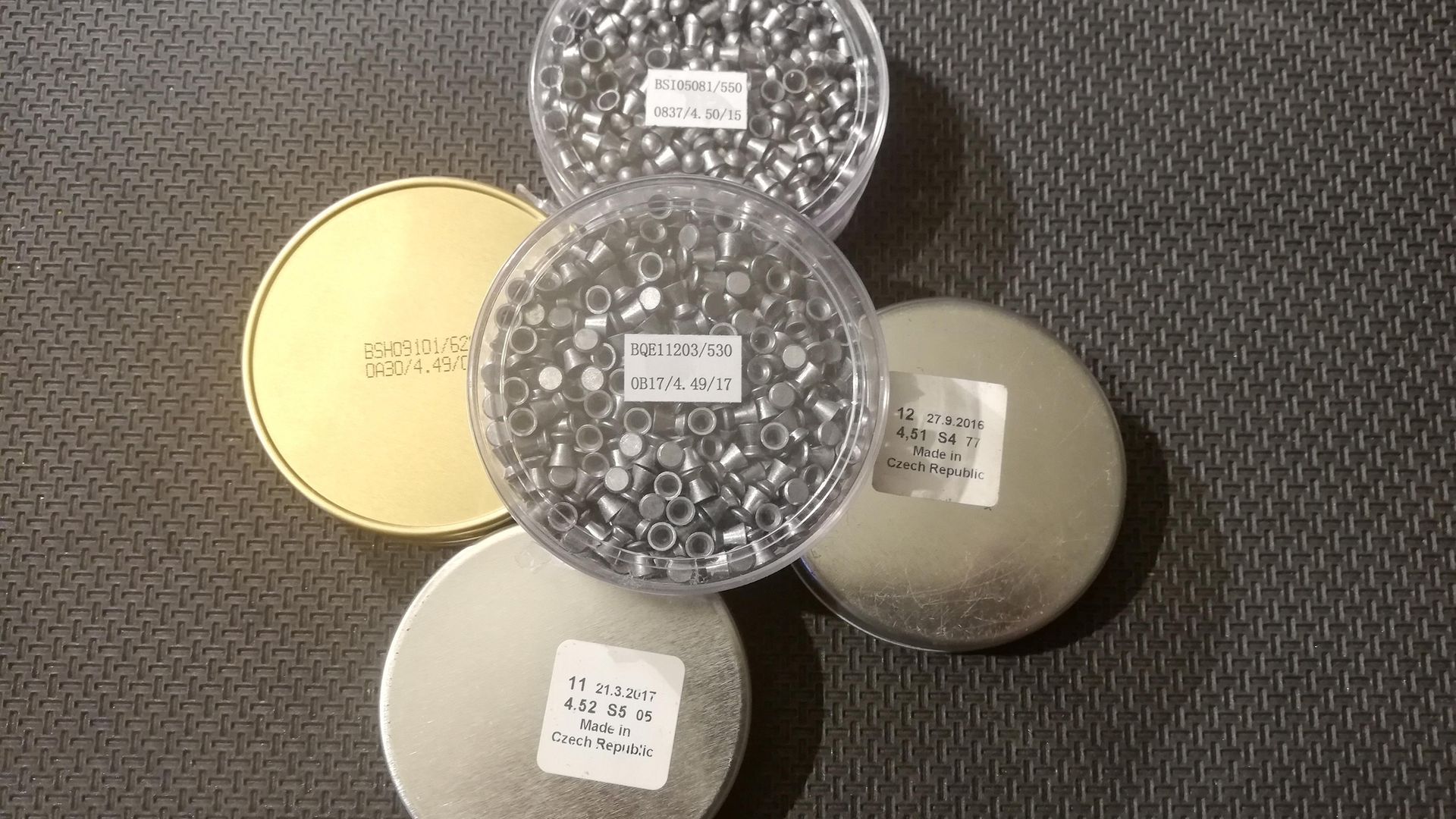
Once you have settled on a pellet type, the next decision is size, and here we do not mean .177 against .22. Within each calibre, pellets are made in a range of head sizes built around the stated bore. A .177 pellet measures 4.50mm in metric terms, but it is not the only option: 4.48mm, 4.49mm, 4.50mm, 4.51mm and 4.52mm are often all available, and the same applies to .22 around the 5.50mm metric.
This fine-tuning of head size is mostly limited to quality domed pellets and wadcutters. In fact, one of the easiest ways to judge whether you are buying a serious pellet is to check whether it comes in a choice of head sizes at all. The right head size grips the rifling correctly for your particular barrel, and a difference of a hundredth of a millimetre can be the difference between a ragged group and a single hole.
How to choose the right pellet for your airgun – step by step
Finding the pellet your rifle shoots best is a process of elimination rather than guesswork. Work through it methodically and you will get there far faster than buying tins at random.
- Step 1. Define the job. Decide what the rifle is mainly for: paper punching, FT or HFT, hunting and vermin control, or casual plinking. The intended use points you straight at the right pellet type.
- Step 2. Choose the pellet type that suits that job. For all-round accuracy and most hunting, start with domed pellets. For short-range vermin or target work, consider wadcutters or hollow-points. For FAC rifles at distance, look at slugs.
- Step 3. Gather several brands of that one type. Buy or borrow three or four brands of the chosen design rather than one of everything. Selection packs and swapping tins with club mates keep the cost down.
- Step 4. Test for accuracy at your typical range. Shoot groups from a rest, in calm conditions, at the distance you actually shoot. Keep everything else constant so the pellet is the only variable.
- Step 5. Fine-tune the head size. Once a brand stands out, test the head sizes it offers (for example 4.51mm against 4.52mm) to find the one your barrel grips best.
- Step 6. Check it feeds and fits. Confirm the chosen pellet seats properly in your breech or rotary magazine, as some longer or pointed designs will not.
- Step 7. Confirm and commit. Shoot a larger group, or a full course, to be sure the result holds up, then buy that pellet in quantity from the same batch where you can.

What else affects which pellet my airgun prefers?
There are hundreds of variables behind why a particular rifle prefers a particular pellet, and a particular head size of that pellet. The headline advice is simple: pick a type to suit your needs, then spend time trying that design from several manufacturers before worrying about anything finer.
Barrel condition is one of the biggest influences. An older, worn barrel may prefer a larger pellet with a thinner skirt to help it grip the lands, yet a brand-new barrel with a tight tolerance might want exactly the same thing, or it might prefer a smaller pellet with a thicker skirt. The interaction between barrel, pellet weight and skirt thickness is rarely predictable on paper, so the only reliable way to find out is to get out and test. Pellet weight matters too: heavier pellets buck the wind better and suit higher-powered or FAC rifles, while lighter pellets can shoot flatter at sub-12 ft-lb but are more affected by gusts.
Getting the best from your chosen pellet
Once you have found a pellet that works, a few habits help you get the most from it. Keep to the same brand, head size and, where possible, the same production batch, as tin-to-tin variation can open groups up. Many shooters prep their pellets, sorting by weight or lightly sizing the heads, to squeeze out the last of the consistency, which is worth doing for competition but rarely essential for general shooting.
If the thought of paying over a tenner for a tin that might not suit your rifle puts you off, there are cheaper ways to experiment. Trade pellets with mates or fellow shooters at your club, or use one of the many selection packs sold specifically to help you find the pellet that works best for you. None of us has found the perfect pellet yet, but methodical testing gets you closer than luck ever will.
Frequently Asked Questions
What is the best all-round airgun pellet type?
Domed pellets are the best all-round choice. They are accurate at all practical ranges, benefit from the most manufacturer research and development, and are the preferred design for FT and HFT competitors as well as most hunters. They are the sensible starting point before you experiment with anything more specialised.
What does pellet head size mean?
Head size is the precise diameter of the pellet within its calibre. A .177 pellet is nominally 4.50mm, but it is often sold in 4.48mm, 4.49mm, 4.50mm, 4.51mm and 4.52mm, and .22 likewise around 5.50mm. The right head size for your barrel grips the rifling correctly, which tightens groups. A choice of head sizes is also a good sign of a quality pellet.
Which pellet is best for hunting?
For most hunting, a quality domed pellet gives the accuracy needed for a clean headshot at typical ranges. Where maximum energy transfer matters at closer range, hollow-points expand and dump more energy, and semi-hollow designs such as the JSB Hades aim to balance expansion with accuracy. Match the pellet to your quarry and your usual shooting distance.
Why does my rifle shoot one brand of pellet better than another?
It comes down to the fit between the pellet and your particular barrel, including its wear, internal tolerance and twist rate, plus pellet weight and skirt thickness. These variables interact in ways that cannot be predicted reliably on paper, which is why two identical rifles can favour different pellets. The only way to know is to test several brands of one type from a rest.
Are slugs better than pellets?
Not for everyone. Slugs have no skirt, weigh more and hold energy well at longer range, which suits FAC-rated airguns, but they usually need a fast-twist barrel to stabilise and will not perform in every rifle. For sub-12 ft-lb shooting, conventional domed pellets remain the more practical and accurate choice. The Precision Ballistics Mako is a slug worth trying if your rifle is suited to them.
Are non-lead airgun pellets any good?
Non-lead pellets are improving but, to date, few match lead for accuracy in serious shooting. They can be made in any of the usual designs and are likely to get much better as environmental pressure drives further investment. For now, lead remains the choice where accuracy is critical, but it is worth keeping non-lead options under review.
Related Articles
News
Shooting
Bell target shooting: more than just a pub sport
Mark Camoccio heads deep into Lincolnshire for his first proper look at bell target shooting, an air rifle discipline steeped in history and quietly thriving in the back rooms of local pubs
By Mark Camoccio

Hunting
News
Is airgunning the solution for grey squirrels?
Defra's latest grey squirrel policy recognises the practical conservationists keeping grey numbers down, and in many cases that means airgunners. Here is why the air rifle remains one of the most effe...
By BASC
Get the latest news delivered direct to your door
Subscribe to Airgun World
Unlock the world of airgun hunting and target shooting with a subscription to Airgun World magazine, Britain’s biggest-selling airgun publication. Written by passionate, long-term airgun enthusiasts, each issue delivers expert insights, comprehensive gear reviews, and invaluable tips to enhance your shooting skills. Whether you’re a seasoned shot or new to the sport, Airgun World offers essential content covering shooting techniques, classic airguns, and the latest equipment innovations.
Save on shop price when you subscribe and pay just £4.60 per issue – 42% cheaper than buying in-store at £7.99!