
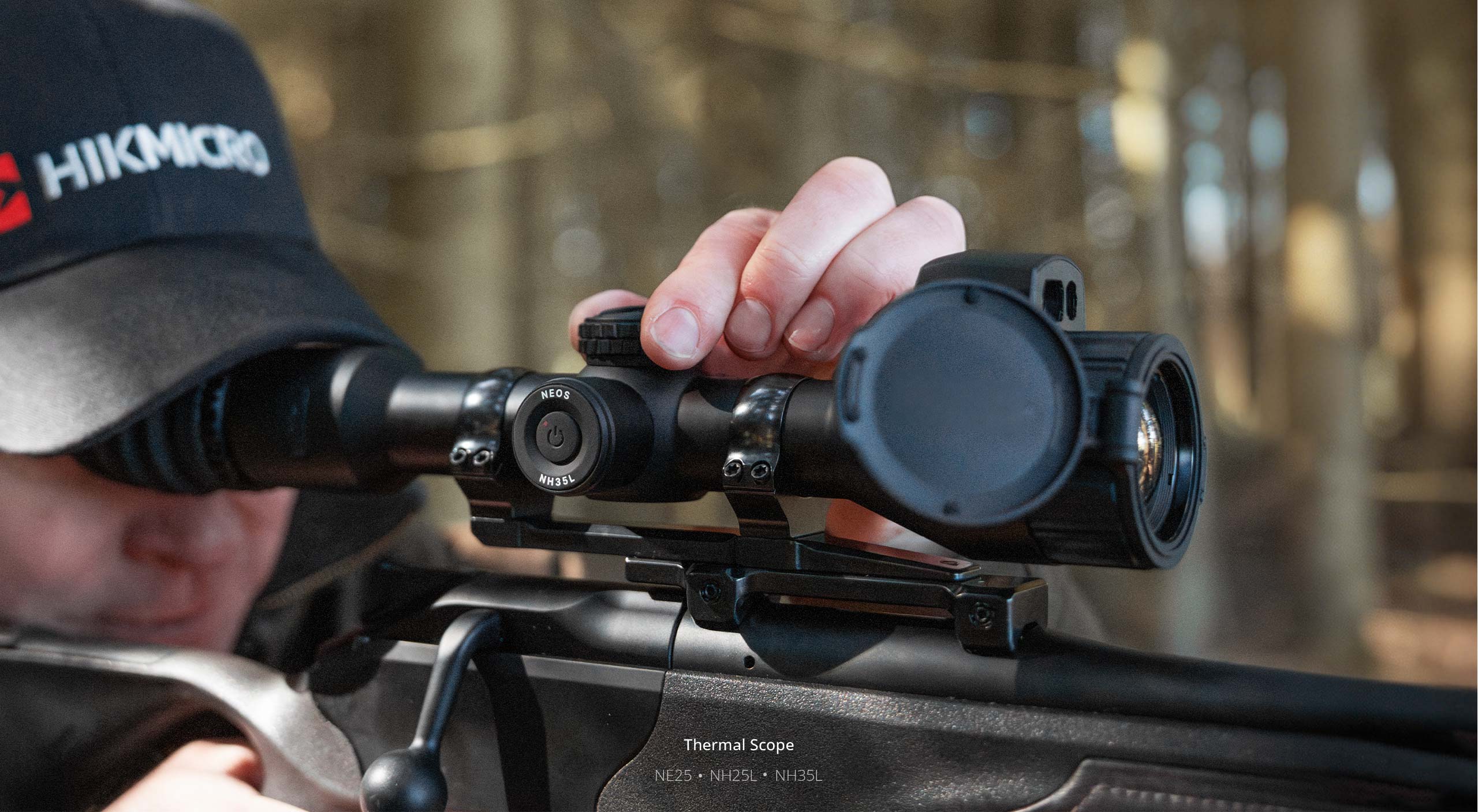



HikMicro NEOS models: NH35L vs NH25L vs NE25
This range effectively signals the “Alpex 4K Lite Revolution” by bringing the simple, effective philosophy of that very popular digital optic into the thermal world. The mission is to show that high-end thermal technology is no longer too expensive or too bulky for the airgun community. By utilising the same 30mm tube chassis that made the Alpex 4K Lite so popular, HikMicro is offering a familiar user experience with thermal imaging capabilities.
Do you need a dedicated thermal scope for airgun hunting?
Well, as we all know, thermal is brilliant for the detection of quarry. This is why I use a thermal spotter to complement my Alpex 4K, allowing me to detect the quarry, transition to the scope, identify the animal and take the shot in daylight, low light and pitch black.
In addition to the cost, IR splashback and the general bulk of the setup, valuable speed is lost during that transition. This, for me, is where a light, efficient thermal scope like the NH35L steps in. At airgun ranges, it can detect, identify and allow you to shoot without the requirement for other equipment, especially if shooting from a static position waiting for your quarry.
Yes, it helps to know the lay of the land in detail when using thermal, to avoid shooting foliage or objects, for example, that may be partially obscuring your target, but your quarry will have no idea you are there until it is too late. No spooking them with IR, nothing. Of course, only you can weigh up the price and the advantages and disadvantages.
HikMicro NEOS NH35L design, weight, and build quality
Is the HikMicro NEOS easy to mount?
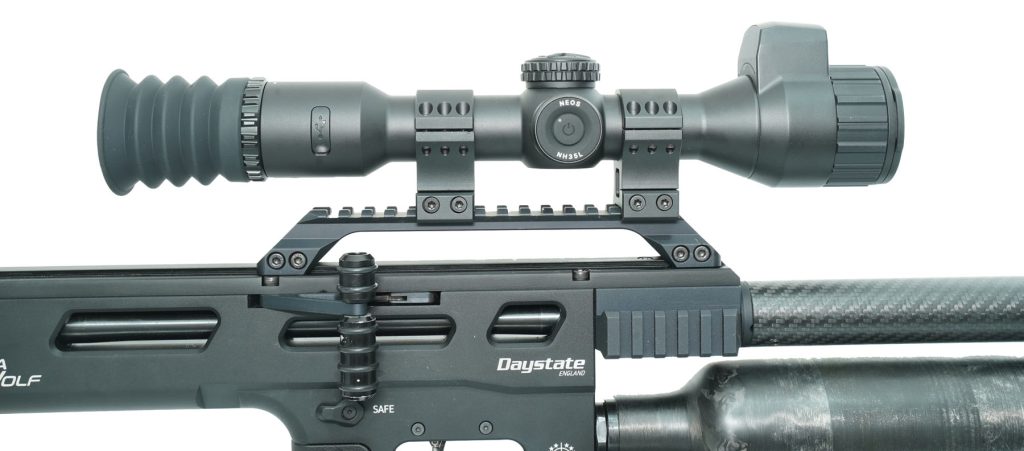
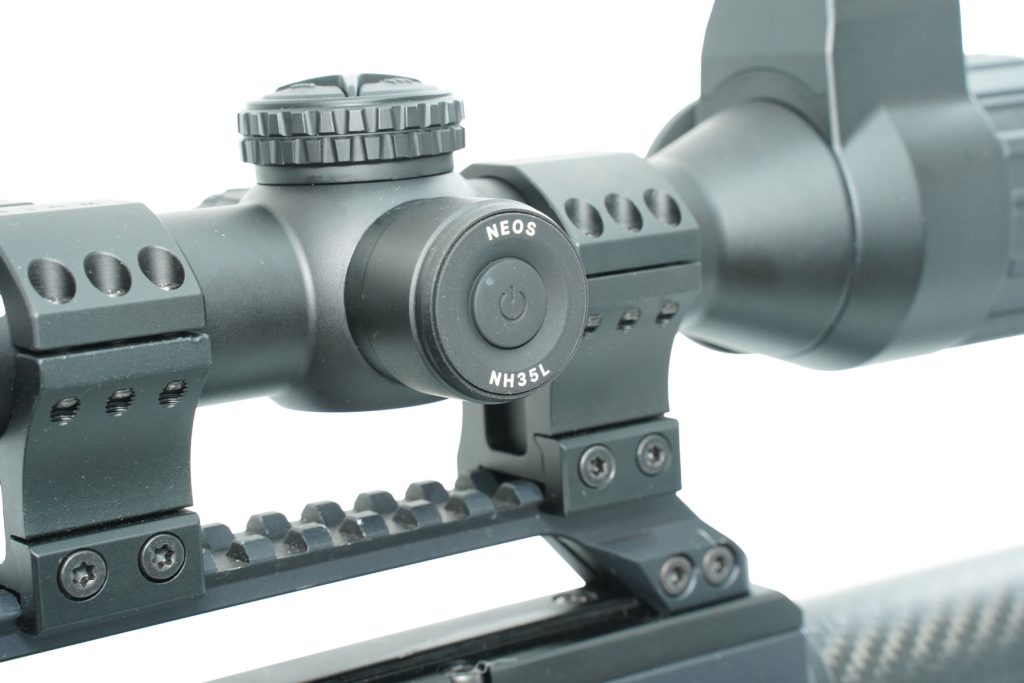
One look at the NH35L and the Alpex Lite heritage is immediately obvious. While many thermal units can feel like a departure from traditional shooting gear, the NEOS is constructed on a standard 30mm tube chassis, allowing it to be mounted with ease using standard rings.
It is a notably streamlined and ergonomic design, measuring just 290mm in length without the rubber eyecup and 345.6mm with it. Perhaps even more importantly, the NH35L is exceptionally light at a mere 570g. While shedding mass can often result in a “cheap” feel, this unit has an air of quality about it.
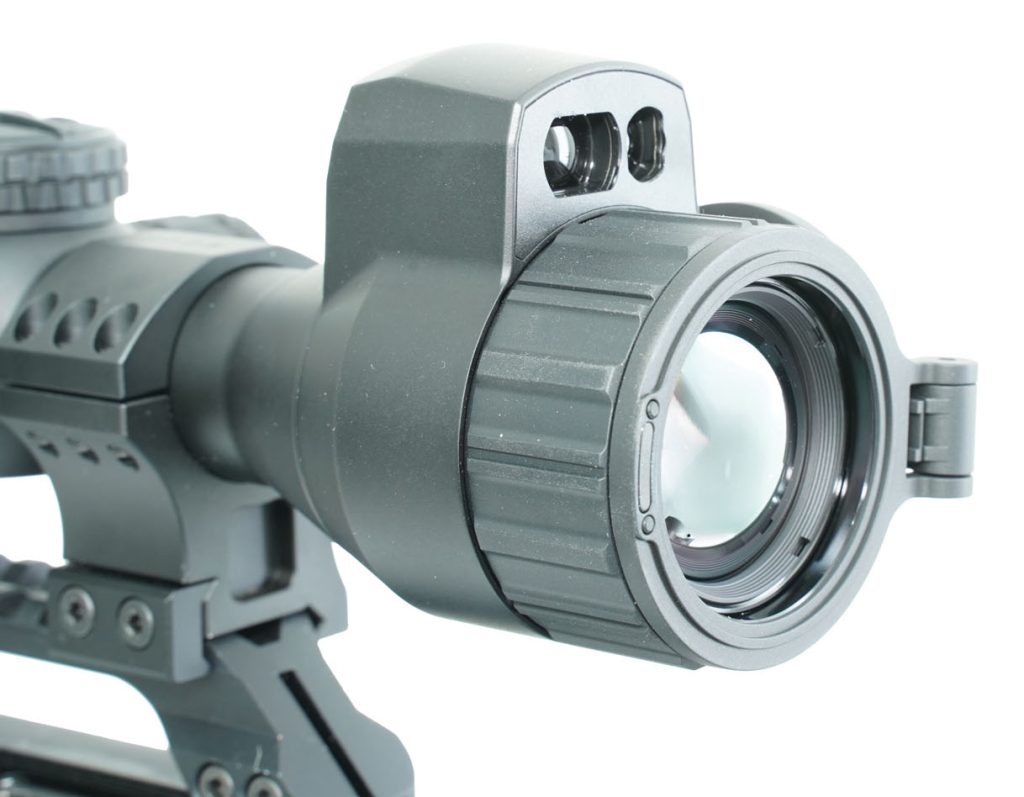
This shedding of mass is a significant win for those planning long shooting sessions, as it ensures the rifle remains balanced and easy to point. The profile is compact enough to avoid making a lightweight airgun setup feel top-heavy, yet it remains rugged with an IP67 protection level. From the rotatable, magnetic objective lens cap to the familiar layout of the controls, the unit feels like a traditional scope, which is just how I like it.
Advanced features: 18mK sensitivity and shutterless imaging
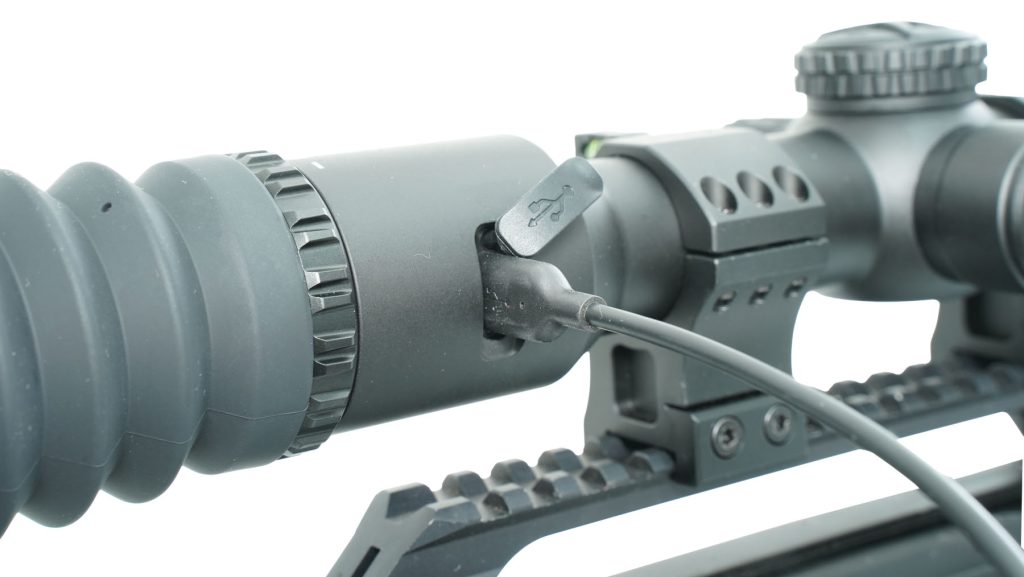
Putting on my lab coat and science hat, the NH35L is equipped with a 384×288 @12µm thermal detector with a sensitivity of less than 18mK, which is great news at this price point. The image is processed through the advanced Image Pro 3.0 algorithm and presented on a large 0.49in AMOLED display. Crucially for airgunners, the minimum focusing distance is only 3m, which is important for close-range pest control or barn work.
What is the HikMicro shutterless image system (HSIS)?
One of the stand-out features is the HikMicro Shutterless Image System (HSIS). While most thermal scopes require a mechanical shutter that periodically freezes the image, this technology ensures a seamless, lag-free viewing experience. This is bolstered by the Sync Pro algorithm, which facilitates rapid image processing to ensure there is no delay when targeting a moving quarry.
Does the HikMicro NEOS have a built-in laser rangefinder and ballistic calculator?
Versatility is provided by the integrated 1,000m laser range-finder and an onboard ballistic calculator that works out your hold-overs at varying distances. The unit’s start-up time is impressive, at just one second, and you get an eight-hour operation time. Sounds good to me.
True base magnification and field of view explained
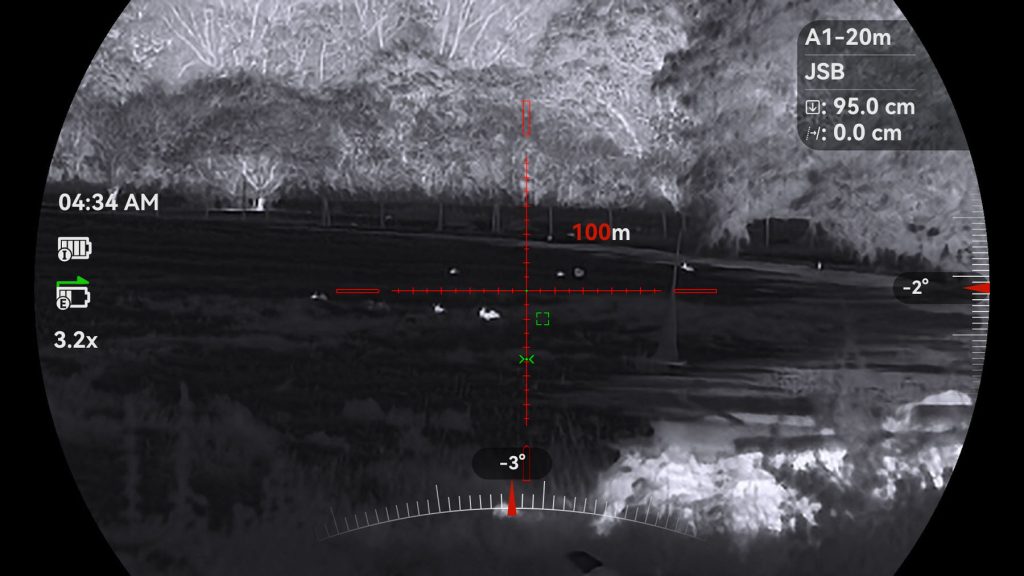
Being fairly obsessive about the field of view (FOV) these kinds of scopes offer, I delved into the specifications. Now, the data sheet officially lists a starting magnification of 4.0x, but my review unit actually displays 3.2x on the screen. This discrepancy is relatively common in the thermal world, where marketing figures are often rounded, but the display reflects the true native optical magnification of the 35mm lens.
For the airgun shooter, this 3.2x true base is actually a welcome discovery. It provides a slightly wider FOV than a true 4x would, which is essential when tracking fast-moving rats or squirrels at close quarters.
What is the field of view (FOV) of the HikMicro NEOS NH35L at close range?
To put this into a real-world perspective, I conducted a quick test. At a range of 11m, as measured by the onboard laser range-finder, the FOV spanned a gap of approximately 1.4m. This tallies perfectly with the official specification of 13.1m at 100m, confirming that the scope is giving you every centimetre of its wide viewing window. While this is naturally tighter than a traditional digital scope, it is perfectly suited for static pest control where you are covering a specific bait station or hot spot.
Control layout and interface: navigating the NEOS turrets
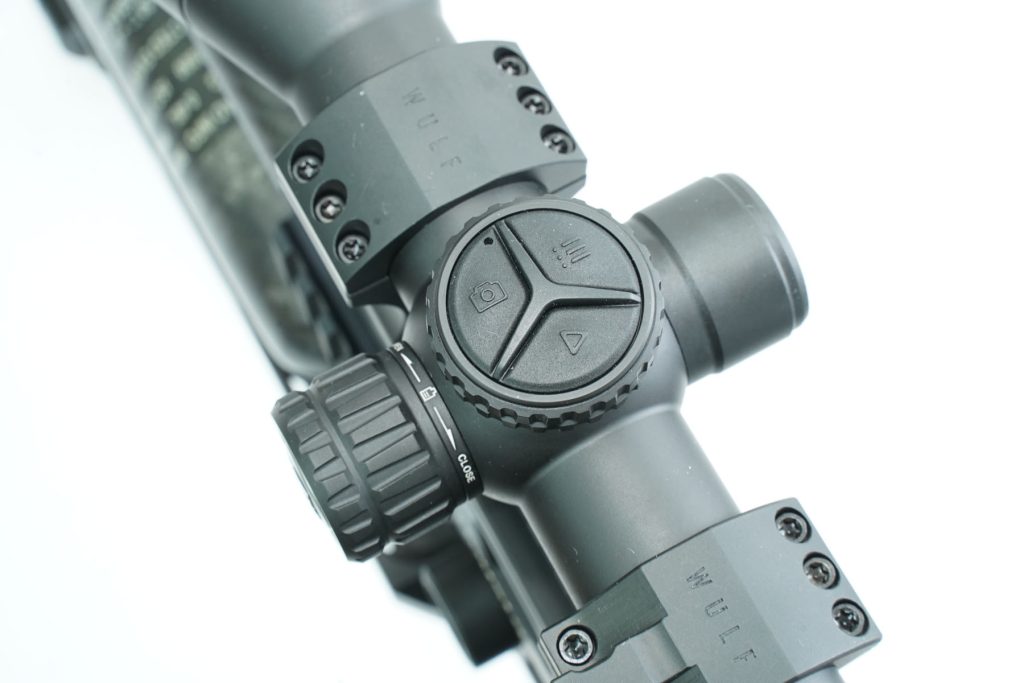
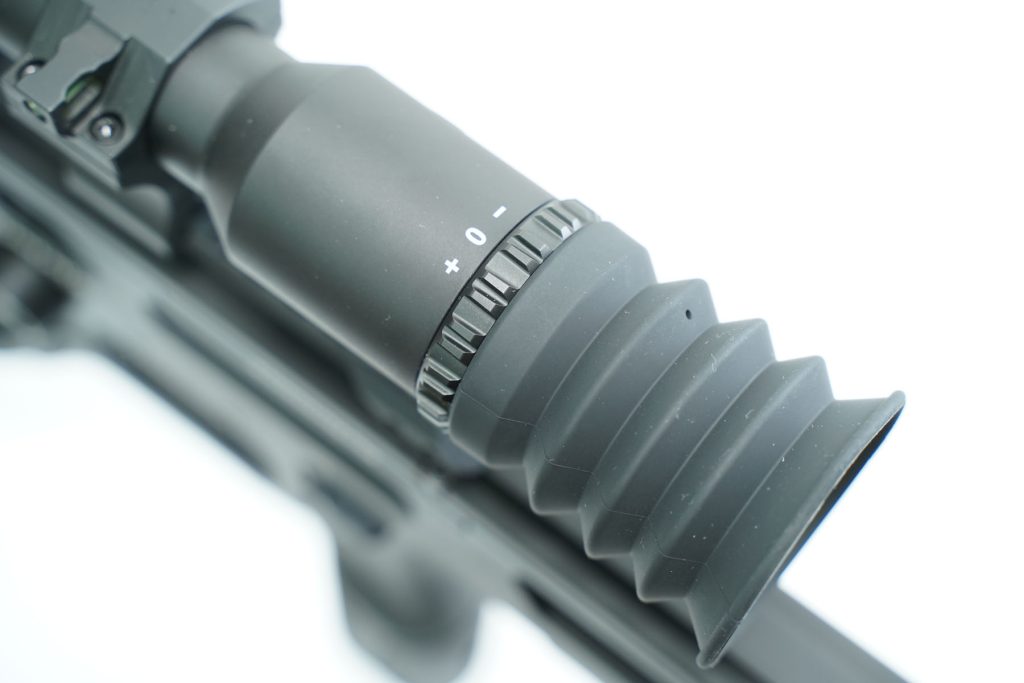
Regarding the controls, for those who are not familiar, the unit features a rubberised focusing collar at the front of the objective and a dioptre adjustment on the eyepiece. The central saddle presents three turrets, mirroring the layout of most modern day scopes.
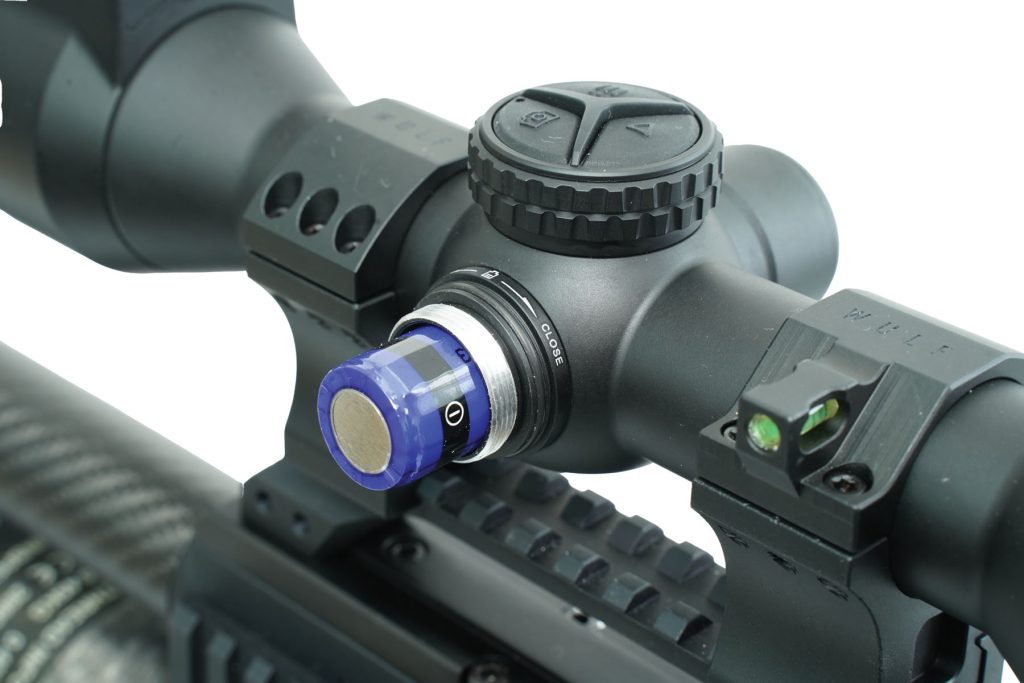
The right-hand turret houses a small rubber power button, which engages standby mode with a single press, while the left-hand turret contains a single, removable 18650 rechargeable battery, which is supplied in the box.
The top turret is equipped with three rubberised buttons that manage the menu, video recording and the laser range-finder. An integrated rotating collar is also built into this top turret to adjust the magnification from 3.2x to 25.6x or to help you navigate the system menus.
These menus provide access to loads of features that I will not attempt to list in full here. Instead, I will highlight the ballistic calculator, the five zeroing profiles, the various reticle designs and the one-shot-zero function.
You can also customise which colour palettes you wish to cycle through (quick press of the menu button), with options including Black Hot, White Hot, Red Hot, Fusion and both Red and Green Monochrome. You can even toggle between observation and detection modes depending on your specific requirements. It’s worth mentioning at this point that the entire system is intuitive to operate.
As the ergonomics and usability of the Alpex Lite are already well documented and battle-proven, I focused my field testing primarily on the NH35L’s performance. Weight, dimensions, controls and the app interface all earn a big tick in the box.
Field test: zeroing and performance in the field
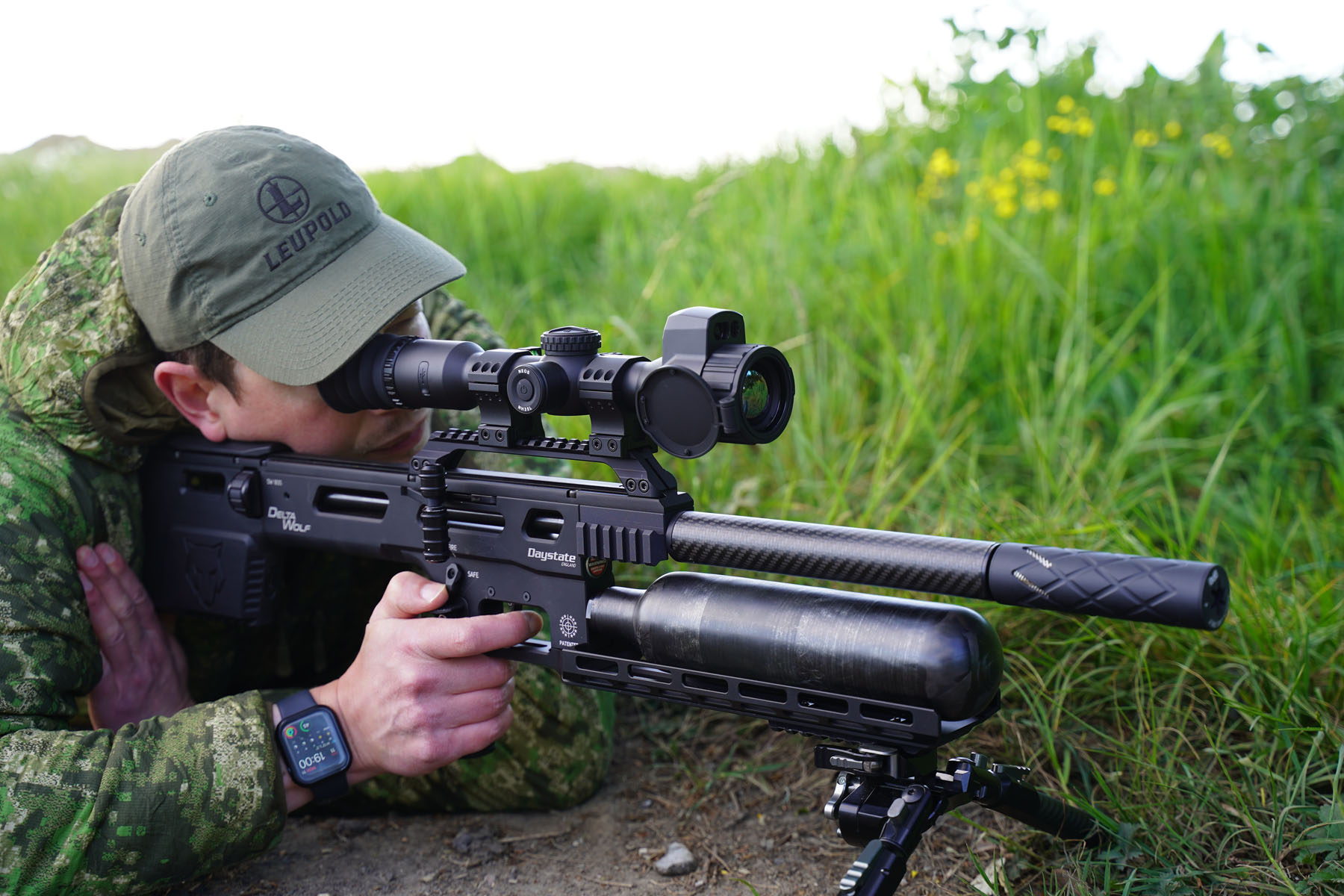
With the scope attached to a Daystate Delta Wolf via Wülf rings, I started off with zeroing.
How to zero the HikMicro NEOS NH35L
I opted for the tinfoil method, taping a cross onto the target board and angling it slightly skywards to ensure a decent temperature differential. As the menu system was already familiar, I was able to navigate the settings at speed, and the one-shot zero worked a treat.
After printing a few confirmation groups, I inputted the ballistic data, which was a straightforward task given the Delta Wolf displays muzzle velocity after every shot. A precise zero was easily achieved, so that’s another tick in the box.
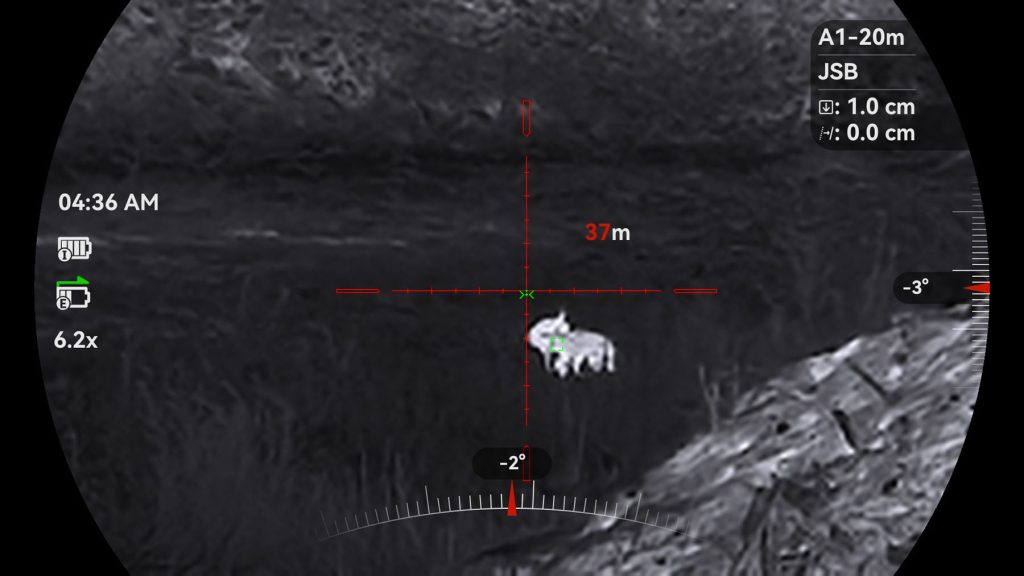
Scanning fields, hedgerows, woodland, pallets and old farm equipment for variety, it was pretty clear from the outset that the clarity was very good. Spotting quarry proved quick and simple, ranging from low-lying hares at several hundred metres to a rat drinking at just 10m, tucked deep within dense foliage during daylight hours. Things only improved as night fell and the temperature dropped. At 37m, I could clearly distinguish the foliage between myself and a rabbit. This is a welcome attribute that highlights the 18mK sensitivity and alerts the shooter to possible pellet deflection.
Having watched rabbits at distances from 30m out to 150m, it is obvious that this unit offers more than enough performance for sub-12ft/lb airgunners and rimfire users alike, and interestingly, the eye relief (55mm), exit pupil (8mm) and max recoil rating are the same as the Alpex Pro, meaning closer-range centrefire use is certainly not off the table either. It’s also worth mentioning that it was great to never have to worry about the image freezing at a critical moment thanks to the shutterless technology.
Is the HikMicro NEOS NH35L worth the money?
As a shooter who uses a thermal spotter and a digital day/ night scope, I consider thermal scopes a luxury, although they are an excellent tool for the kit bag. At £1,499.99, the NH35L provides performance that may well exceed most airgunners’ requirements, making it a versatile choice for owners of a rimfire or centrefire.
HikMicro NEOS NH35L vs NH25L: which should airgunners buy?
However, strict airgunners should look closely at the NH25L first. At £999.99, it offers a more accessible entry point as you are not having to pay for a larger lens that gives you magnification you don’t necessarily need.
The NH35L is a fantastic, multi-purpose optic, but if your focus is airgun pest control, the more affordable NH25L with its 320×240 sensor might be the logical choice.
The HikMicro NEOS NH35L thermal riflescope retails at £1,499.99. For more information, visit eliteoptical.co.uk