5 of the best after-market magazines for airguns
After-market airgun magazines are third-party alternatives to original factory magazines and our list offers solutions for brands including BSA, Daystate and Theoben
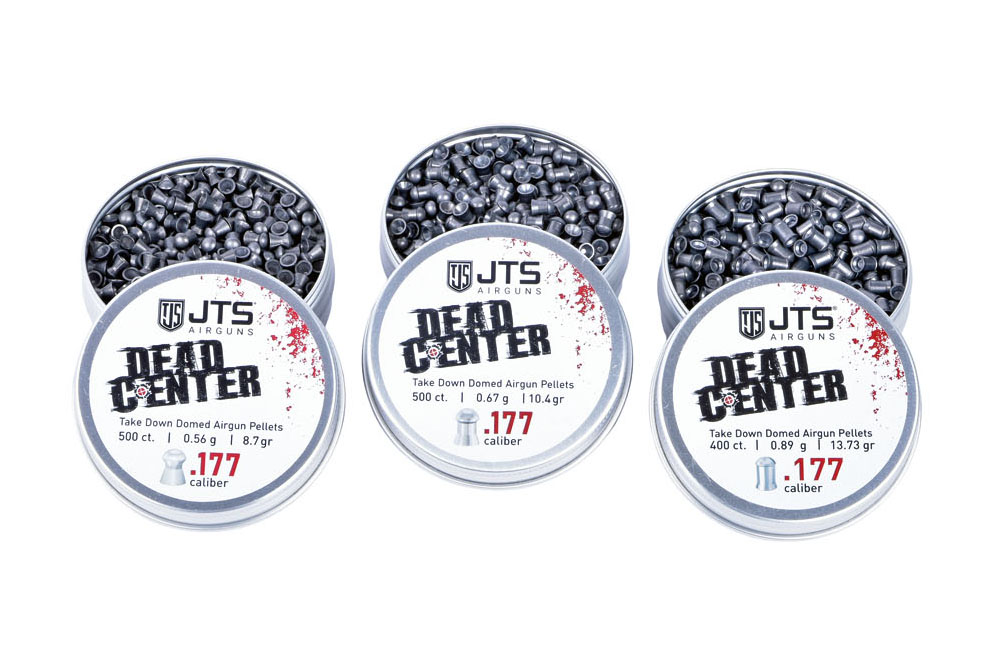
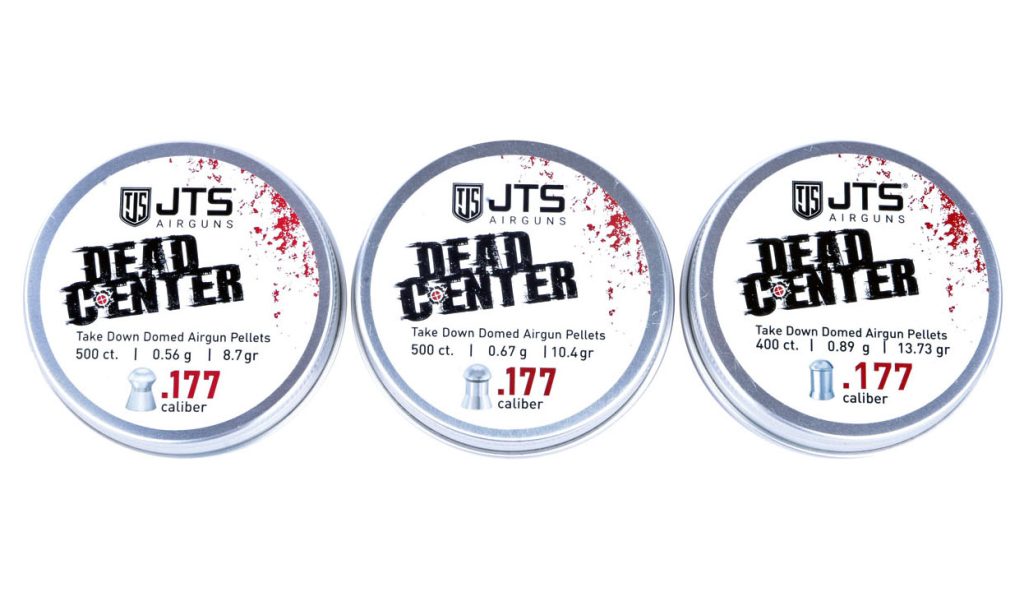
JTS Dead Center .177 pellets represent a technical evolution in ammunition, utilising aerospace-engineered tooling to achieve remarkable uniformity and eliminate the need for manual sorting. Across a range spanning 8.7gr to 13.73gr, these pellets deliver match-grade consistency and superior downrange energy with weight differentials as low as 0.03 grains.
The Shooting Party, which distributes these JTS pellets in the UK, has worked closely with the founders of JTS in Katy, Texas, for over a decade, and has been its manufacturing partner for many of its most successful products.
JTS Airguns officially introduced its .22 Dead Center Pellets to the world on 4 January 2023. Having spent more than two years reviewing the current market offerings, it determined that there was a need to produce a competitively priced product that has performance characteristics better than the industry’s best.
JTS commissioned a multinational group of engineers with disciplines in mechanical, industrial, aerospace and design to set this project in motion. This team quickly determined that airgun pellet manufacturing had essentially been unchanged for years. Current pellet processing is inconsistent and requires sorting of all production products to ensure that consumers receive acceptable products. This inspection process is both expensive and time-consuming.
The team took the next step in the evolution of pellet manufacturing and designed proprietary equipment that would stabilise the manufacturing process and ensure its consistency, thus reducing the need for sorting. Once the manufacturing equipment was completed the team moved on to the next step in this evolution.
Pellet production consistency is also largely affected by the tooling required to make each pellet. The JTS tooling was designed with three key things in mind: Standardisation of Tooling, SMED (Single Minute Exchange of Dies) and No Adjust Tooling. These three concepts are what sets Dead Center pellets apart from their competitors.
The next step was to design pellets that were accurate across as many platforms as possible. As we are all aware, there are many styles of airguns from break-barrels to high-end competition PCPs. JTS designed the pellets utilising the latest in aerospace designs to ensure that the finished pellets would be super-accurate and consistent.
The designs then went through extensive testing across a wide range of airgun platforms and environmental conditions. All JTS pellets are manufactured using state-of-the-art production processes, ensuring uniform weight, shape and balance throughout the tin. The domed head profile supports straight, stable flight and energy retention downrange, while the consistent construction contributes to tighter groupings.
I reviewed the original .22 pellets at the back end of 2023, having used them extensively while reviewing all manner of .22 test rifles, as well and getting out in the field and hunting with them. To say I was impressed is an understatement. I couldn’t believe how consistent they were across multiple platforms. I have recommended them to many .22 shooters since, and have had no negative feedback to date, which says a lot.

You can imagine how excited I was when Mike Hurney from The Shooting Party called me to let me know the .177 pellets had landed! I know for a fact that JTS embarked on a mission to bring us this range of .177 pellets two years ago, after the success of the .22 range. It has taken just over two years to get everything right whilst developing this new waisted .177 pellet line, and from my initial findings it was well worth the wait.
I had intended on making this review an all singing all dancing “mega test”, but as many of you are aware, at the time of writing it has been raining every day for well over a month. I have taken them to my local club range, and I got some really good results in the rain. I want to be fair to everyone involved and test these pellets in perfect conditions to get the absolute best out of them. So watch this space next month for my thorough testing on the range at multiple distances, plus all the relevant chronograph data to boot.
For now, though, let’s have a look at the three different .177 pellets that are available, what they are designed for, plus some techy blurb. I actually sat there and weighed every single pellet from all three tins, and I’m quite frankly astonished by just how uniform they all are. If you’ve ever weighed pellets yourself, you’ll be completely amazed by these findings.
I must make one thing clear before we start. My digital scales are calibrated to 50g and then the unit is switched to grains (gn on these scales). They are super-accurate and they were just sitting on my living room table – hardly laboratory conditions, but we are talking in one-hundredths of a grain differential here, which is remarkable. The consistency is what blew me away. Pellet after pellet weighed exactly the same as the one before it, with just a tiny minority of deviations.
These pellets are constructed from high-quality lead alloy typically used for airgun ammunition, providing reliable deformation characteristics on impact for effective energy transfer. They’re actually slightly harder than some other pellet brands, which helps them keep their shape and consistency.
They’re the lightest pellets in the range with a familiar diabolo shape, and I’m sure these are going to be a firm favourite with target shooters. My initial testing on the range at 30m in the rain returned some excellent results, but more about that next month.
RRP: £17.99
Pellets per tin: 500
Stated weight: 8.7gr
Average weight: 8.78gr
Weight difference: 0.03gr (488 x 8.78gr, 5 x 8.79gr, 2 x 8.8gr, 5 x 8.77gr)
Pellet length: 6.4mm
These midweight domed pellets are designed to generate superior velocity and harder hits compared to the lighter ammo, and JTS claims that these pellets carry more downrange energy than standard pellets.
You’ll notice that they have a shape more akin to a pellet/slug hybrid with a slightly shorter profile and more mass in the mid-section. These pellets are sure to be a big hit with hunters, but you can also use this .177 pattern for target work and competitions too.
From my initial testing, I’m quite confident that these are going to be my new midrange hunting pellet of choice.
Price: £18.99
Pellets per tin: 500
Stated weight: 10.4gr
Average weight: 8.37gr
Weight difference: 0.04gr (481 x 10.37gr, 6 x 10.38gr, 12 x 10.39gr, 1 x 10.36gr)
Pellet length: 6.0mm
These are the real brutes of the range, weighing in at 13.73gr – that’s nearly 4gr heavier than the .177 pellets I currently use for my hunting!
These feature a domed head profile to help with stable flight, and they’re the longest of the bunch measuring in at 7.0mm. That said, they really are getting close to slug territory, with minimal gap under the semi-hollow skirt and a whole lot of mass in the main body. This small gap under the skirt still helps ensure a good seal in the barrel, though.
Again, my initial testing out to 30m has been very interesting, and I think some hunters are going to love these. The added mass and profile is going to help with wind drift downrange, but I think they’re going to be especially good for short range ratting with some serious hitting power.
Price: £18.99
Pellets per tin: 400
Stated weight: 13.73gr
Average weight: 13.75gr
Weight difference: 0.03gr (484 x 13.75gr, 5 x 13.77gr, 9 x 13.76gr, 2 x 13.74gr)
Pellet length: 7.0mm
Get the latest news delivered direct to your door