★ Competition – win a Konus Wild riflescope worth £90 – enter here! ★

Interview with Northern Monkey HFT co-founder Pete Muir
Airgun World sits down with Pete Muir, one of the founding members of Northern Monkey HFT to find out what the group offers, who is involved and how its unusual name came about

Airgun World (AW): What exactly is Northern Monkey HFT, and at whom is it aimed?
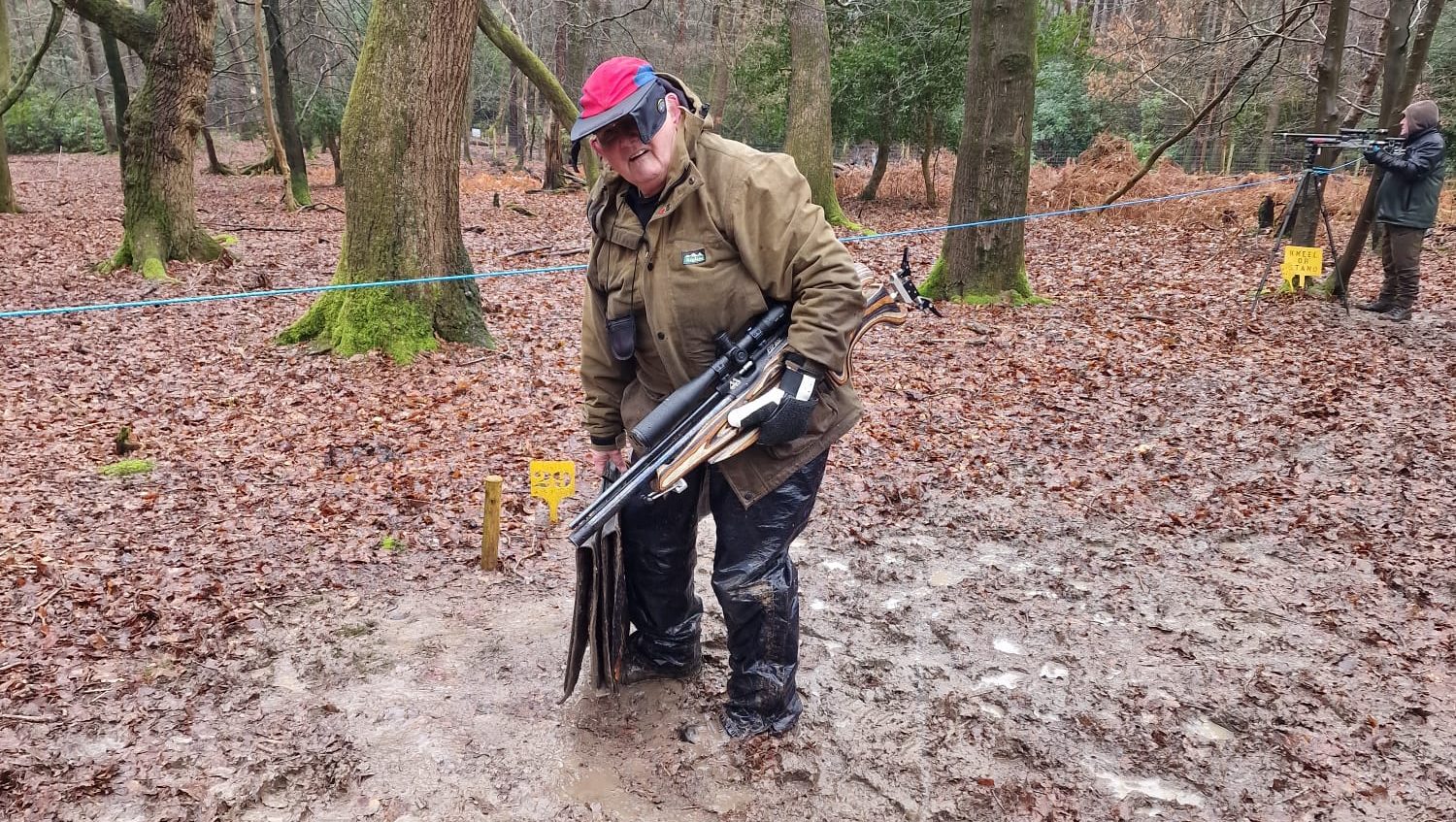
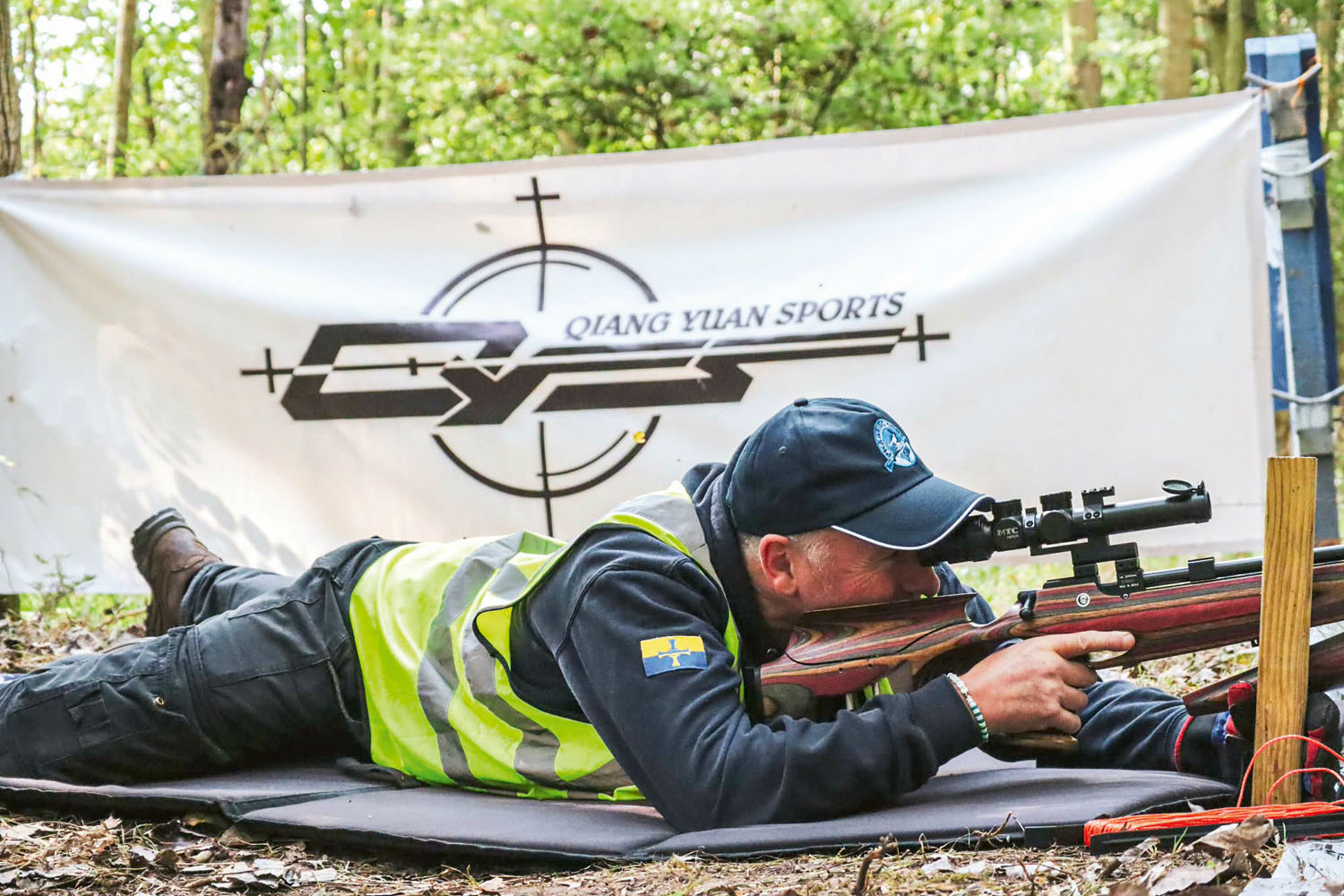
Pete Muir (PM): The Northern Monkey HFT group consists of a number of like-minded airgunners who enjoy the sport of Hunter Field Target (HFT). The goal of the group is to hold monthly HFT shoots in a friendly, relaxed atmosphere, while simultaneously ensuring the courses are always first-class, without compromise and delivered within a safe environment. The events cater for all-comers. You could have a complete novice on one side of you and a world-title-winning shooter on the other.
AW: When was Northern Monkey HFT founded, and who were the founding members?
PM: The group was founded by chance in 2016. At the shooting range where we are still based, a few of the local shooters had talked about trying out the HFT side of the sport. Unfortunately, there was nothing within 100 miles, so we decided to set up our own. We initially thought it would be an informal, small practice for maybe half a dozen of us now and again. As the only person who had shot any HFT, I was somehow pushed to the forefront.
Surprisingly, we still have some of the same founding members from those early days. Dave Dresser is my right-hand man and generally gets the blame for my frequent inadequacies. Tom Ireson is still in the background doing all the “techy” stuff that Luddites such as myself can’t do: score spreadsheets, looking after the “interweb” stuff and even fixing targets in his workshop. Tom is an ever-present cog in the machine.
AW: Where does the name come from?
PM: The name wasn’t anything we thought long and hard about. I have a few shooting friends from down South, and they used to lambast me with the “Northern Monkey” moniker whenever I was visiting shoots. We went with “Northern Monkey HFT” for no other reason than it was a working title for our original project. Ten years on, it has never been changed. It suits what the group is all about.

AW: Was the establishment of Northern Monkey HFT straightforward?
PM: Setting up the group was fairly simple, as we weren’t originally looking to achieve anything more than a handful of targets to practise with. Bob Dunkley is the owner of the range where we are based; he has been a multiple world champion in various shooting disciplines and is a huge advocate of target shooting. He gave the group lots of encouragement and help in the early days.
The first events were held at Woodview Air Rifle Range. The range has a large adjoining woodland which is fantastic for HFT. As I mentioned, it was originally meant to be a small introduction to HFT for those new to the sport. Each month, however, we seemed to move on from that, and very soon it became a full 30-target course run to strict rulings.
We started with absolutely nothing. The range owner donated some targets, we begged for others from various people, and the original members generously dug into their own pockets to purchase targets. Most of the other equipment was “acquired”. It’s funny looking back; everything was scrounged, borrowed and, er, borrowed again.
AW: What were the valuable lessons you learned early on?
PM: One of the first lessons we learned — which has stayed with us — is that safety rulings must be strictly enforced. At a standard HFT shoot, the safety side of things is generally well-adhered to. When we first started, however, the rifle handling of some newcomers was frightening, to say the least. From the outset, we made sure there were no half-measures.
People either follow the safety rulings or they aren’t allowed back. Safety can’t be compromised; there’s always someone who thinks they know better, but we don’t accept risk-takers. These are only basic rules, and I always make a point of saying that if junior shooters can follow the guidelines, there’s no excuse for stubborn older folk.
AW: Was there a single moment when you thought “This could be a success” or was it a more gradual thing?
PM: It’s hard to define “success”. We started with the idea of a few practice targets, but it’s been a gradual upward momentum from day one. We moved from a few targets to a course, then a new course each month, then a competition day, then a full series. Eventually, our courses started to get recognition for the work that goes into them, and we’ve been invited to set courses for the UKAHFT, the WHFTO and other one-off events. We’ve set the bar high, but there is still a long way to go.
One thing I will say that equates to success is when a lane is wrongly called “illegal” by a competitor. “That target is over distance” or “that kill-zone size is incorrect” — those comments are music to a course setter’s ears. I try not to be smug, but it’s a fantastic feeling when you put so much effort into a target —say, a range trap — and it works exactly as intended.
AW: What rules/ mantras are you guided by in the running of Northern Monkey HFT?
PM: Safety aside, we are a very laid-back bunch. The Northern Monkey HFT group is known for being one of the friendliest in the country, and we work hard to keep it that way. Just follow the guidelines and show respect to your fellow airgunners, that’s all we ask.
AW: What makes a good HFT course and what are the hallmarks of one laid out by Northern Monkey HFT?
PM: A good HFT course should be one that’s always “clearable” but doesn’t actually get cleared. In an ideal world, you want at least a couple of lanes where the competitor scratches their head, clueless, after the shot, wondering why they missed. It’s far too easy to set a long course in the open on a windy day, or set everything at maximum distance. That latter point is a common mistake made by new course setters; stretching a target to its maximum isn’t the only way to keep scores down.
Some of the top shooters these days are phenomenal, and it takes more than long shots to fool them. I like to include range traps, different-sized targets, odd kill-zone sizes, varying light effects and elevated shots. I have some tricks up my sleeve that I’m not aware of others doing; they seem to work, so they stay secret. It’s a satisfying challenge to outsmart the top shots.
AW: How do you keep courses interesting, and from whom, if anyone, do you take inspiration/ guidance?
PM: The legendary Ian Bainbridge told me right from the off: “Everyone should be able to shoot your courses.” All lanes need to be suitable for everyone — clear for either hand, accessible for those using sticks, and catering to every ability. At our venue, we always try to have a new firing line. We are fortunate to have access to a large, mature woodland, so we mix it up each month. It means a lot of hard work for the volunteers, but that’s one of the appeals of Northern Monkey HFT — it’s always different.

AW: Is there such a thing as the perfect course?
PM: No course setter would ever say there is a perfect course, as they always chase the impossible and are never happy with the result. It’s well known they’re a grumpy, miserable bunch chasing perfection! But a venue combination of Emley Moor, Furnace Mill lakes, Cloybank’s notorious wind and Anston’s grounds would be fantastic.
AW: Is the weather a friend or foe?
PM: For me, the biggest factor in missed shots is the wind. The shooters consistently at the top of the leaderboards are those who can shoot well in the wind. I once read: “You don’t learn how to shoot in the wind by not shooting in it.” I’ve unashamedly stolen that mantra. My advice is to practise in the wind, whereas many people will call off a session for that reason.
Most course setters pray to the wind gods the night before; I, on the other hand, set a course for no wind. Our woodland is deceptively sheltered. You can hear the wind rushing through the treetops but feel nothing below. It’s sometimes hard to get any movement on a pellet’s flight, so I set targets as if there will be none. But that’s the beauty of an outdoor sport — we can’t predict it. We’ve had to move pegs or firing lines when a pond’s edge was underwater on shoot day, and we even had to cancel once when a storm took several trees down exactly where we were meant to be lying.
AW: What does legacy mean to you?
PM: Would we leave a legacy if it all ended tomorrow? I doubt it. But we were one of the first in the country to have a “Sticks” class, and it’s nice to see that this has been adopted at a national level and even found a place at the World Championships. I believe we have helped push HFT in the North East over the last 10 years.
I know for a fact our antics will always be talked about. The social side of NMHFT is unsurpassed. I consider many of the regulars to be good friends. One of my best friends is a fellow “primate” — I’m not sure if that’s a good or bad reflection on me! When we go to the WHFTA, we take up the whole hotel. Everyone wants to get involved that weekend, not because we are the greatest shooters (we aren’t) but because a “Monkey Weekend” is one big laugh from beginning to end.
AW: What are your immediate and future plans for Northern Monkey HFT?
PM: We are currently rounding off our successful Winter Series. We will be designing the course for the UKAHFT at this year’s Northern Country Sports Show in Harrogate, and then we will be holding the prestigious Andrew Luckley Memorial Shoot, where we raise money for the group’s running costs and for the Lochaber Mountain Rescue Team.
AW: What is your message to anyone thinking of coming along to one of your events and how would you describe the current health of the HFT scene?
PM: I feel HFT is in a great place. The top 20 shooters in the country are shooting at such a high standard it’s hard to understand how they walk off with such high scores. It’s also pleasing that it’s not just about the “Open” class anymore; every class now has a healthy following.
To anyone thinking about giving HFT a try: get yourself along. Northern Monkey HFT shoots are perfect for beginners or veterans wanting practice. There’s no judgement, no prima donnas and no “gun tarts” (well, maybe the odd one). It’s a friendly bunch, and if we have our way, it always will be.
Related Articles
Features, interviews and advice
Interview with Andy Gowan from Elite Optical
Andy Gowan, the marketing manager at Elite Optical in Exeter shares the brand’s strategic goals and plans for 2026
By Martin Puddifer
Features, interviews and advice
Bristol Airguns: How to host an open day
David Player from Bristol Airguns shares his advice on hosting a successful open day for anyone else in the trade who is considering staging one of their own
By Martin Puddifer
Get the latest news delivered direct to your door
Subscribe to Airgun World
Unlock the world of airgun shooting with a subscription to Airgun World magazine, Britain’s biggest-selling airgun publication.
Written by passionate, long-term airgun enthusiasts, each issue delivers expert insights, comprehensive gear reviews, and invaluable tips to enhance your shooting skills. Whether you’re a seasoned shot or new to the sport, Airgun World offers essential content covering shooting techniques, classic airguns, and the latest equipment innovations.
Save on shop price when you subscribe and pay just £4.07 per issue – 42% cheaper than buying in-store at £6.99!