★ Competition – win a Konus Wild riflescope worth £90 – enter here! ★
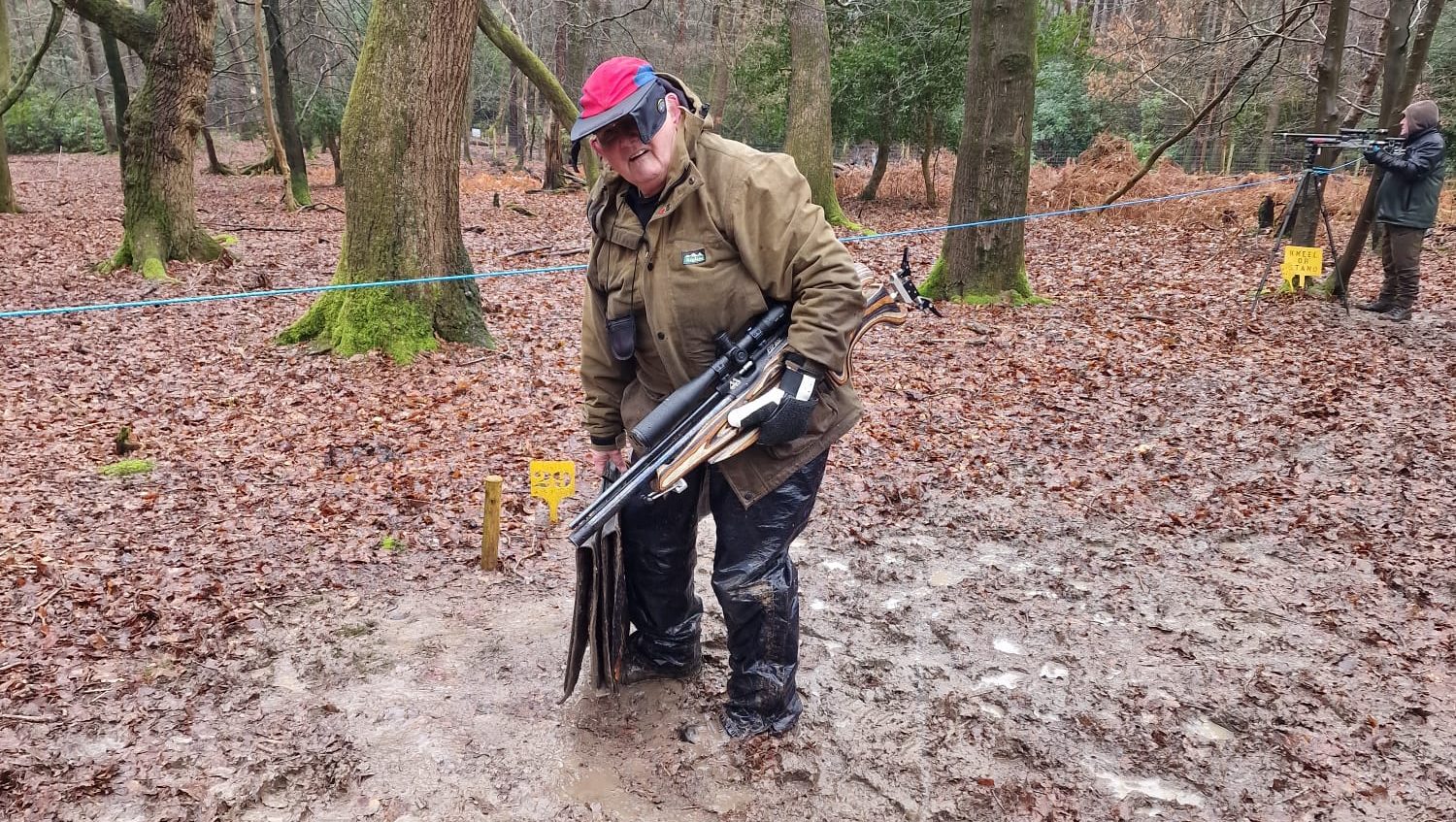

Meet guest editor Graham Freeman
World Champion Graham Freeman discusses his journey from a childhood BSA Meteor to elite benchrest shooting, offering expert advice on precision gear, budget-friendly competition, and his ambitious goals for 2026
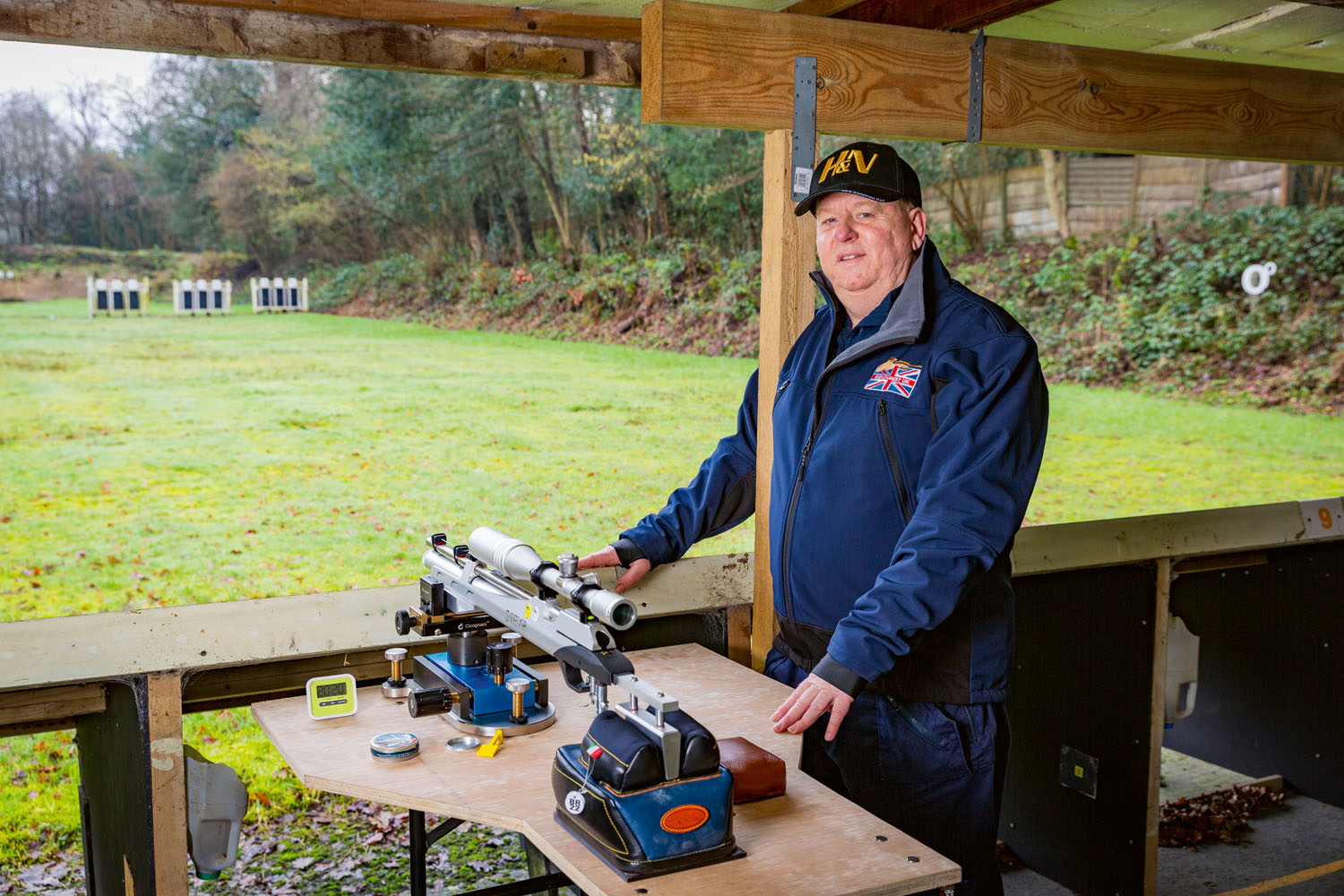

Airgun World (AW): Who is Graham Freeman?
Graham Freeman (GF): I am a 62-year-old IT engineer and a former World, European and British benchrest shooting champion. I live in East Sussex and my home range is East Grinstead Target Shooting Club. I am the secretary and a founding member of Benchrest UK, the governing body in the UK for world rules benchrest shooting affiliated to the WRABF and ERABSF.
AW: When did you first become interested in airguns/benchrest shooting?
GF: I first got into air rifle shooting as a kid, when my dad bought me a BSA Meteor for Christmas, which I used to shoot on a friend’s farm. I have owned various air rifles throughout my life, but it wasn’t until 2009 that I took up shooting benchrest and started shooting competitively in 2010.
AW: What was it about benchrest that attracted you to this particular branch of airgunning?
GF: I was attracted to benchrest shooting as it’s about accuracy and precision; no matter how good your setup is, you are always looking to improve on it.

AW: What was your kit setup like when you first started shooting benchrest?
GF: When I first started shooting benchrest, I had an Air Arms 400 Carbine with a cheap scope, a Caldwell Rock front rest and a cheap back bag that leaked sand all the time.
AW: What was it like shooting with this kit – did it “do the job for the time being” or were you looking to upgrade after certain milestones had been achieved?
GF: At that time, the Air Arms 400 Carbine was a popular choice for benchrest; an accurate and reliable rifle and the one that I used in the World Championships. I still have this rifle as I wouldn’t part with it. The sport was in its infancy when I started and there was not a lot of choice for kit. I used what was available at the time.
Things have come a long way now, and as the sport has grown and progressed, so has the kit and the choice and availability of rests, back bags and equipment. I have upgraded my kit throughout the years, but I am a real believer in the saying “if it works for you, then don’t change it”.
AW: Were you at all self-conscious about entering the sport with a modest kit setup?
GF: No, we all have to start somewhere and a modest kit setup does not mean that you can’t win or shoot well.
AW: What is your message to anyone thinking about coming into airgun shooting who is concerned that they don’t have the best rifle and all the other bells and whistles?
GF: It’s been proved by my great friend Matthew Gleaves BEM and his AirAbility YouTube videos that benchrest can be done on a budget and still be competitive. Elemental Target Solutions are producing 3D-printed stocks for the Air Arms HFT 500, as well as rests and equipment which are budget-friendly. We only have to look back through the medal winners this year to see the varied rifles that medalled.
AW: Who were your biggest influences when you first started shooting?
GF: That would be my dad. He took me up to the farm every weekend and taught me how to shoot. This went on to help me later on in life.
AW: What were the specific things that he taught you?
GF: My dad’s first rule was always to respect the rifle. If I messed around with it, he’d take it away for a week, no questions asked. He taught me how to look after my gear, too — cleaning my gun every single time I used it, making sure everything was in good shape and so on.
Once I had the basics down, he moved on to sighting in the rifle and actually aiming. Later, he taught me how to breathe properly when taking a shot and how to read my surroundings instead of just staring down the scope. Those lessons stuck with me more than I realised at the time.

AW: Can you remember the first competitions you entered and your motivation for doing so?
GF: My first competitive competition was at Portishead Shooting Club, the Brass Monkey Benchrest Shoot, run by Ken Stockham, which is still running to this day and is a great competition for all abilities. I had competed successfully in postal competitions and wanted to take it to the next level in shoulder-to-shoulder shoots. I wanted to see how competitive I was against other shooters from different clubs who had been competing for longer than me.
AW: At what point did you begin to take your competitive shooting more seriously – and what were your early competitive ambitions?
GF: When I got the invite to shoot for the UK and to take part in the World and European Championships in Pilsen, Czech Republic. My early competitive ambitions were just to shoot for the UK. I did better than I thought and won Air World and European Gold.
AW: What was it like shooting in those early competitions – were you nervous? Did you have to approach your shooting in a different way given that every shot counts?
GF: I was nervous in the early competitions as it was all new to me and I had only competed at a club level. Shooting alongside 30 strangers was a bit daunting, but everyone was friendly and helpful and I have made lifelong friends through shooting. The main thing in approaching my first shoot was to remain calm, keep to my routine and not panic or dwell on it if I had a bad shot.

AW: How did it feel when you won the Air World and European Gold? And did you think there was any extra pressure on you thereafter?
GF: I was overwhelmed with winning any medal, let alone taking the World and European Gold medals in my first World Championship. It’s a moment I am very proud of and I will never forget that feeling listening to the national anthem. And on feeling any pressure — yes, definitely. Once you have won, you have a target on your back and everyone wants to try and beat you.
AW: What is your current kit setup and with which brands are you currently affiliated?
GF: My current kit setup is a Steyr LG110 extended which has been greatly modified to become a highly accurate benchrest rifle. The scope is a Weaver T36 and the mounts are Tier One. The hand grip has been removed and replaced with a pinch post. I have a custom harmonic damper on my barrel, both of which are my own design. The front rest is a Cicognani and, last of all, a Lenzi back bag.
I have been using this setup for a long time. I always tell people to get a setup that they are happy with and spend time fine-tuning it. I see too many people trying to “buy” accuracy and changing rifles and equipment from shoot to shoot, and it rarely works. I use my own custom-made wind flags along with crosswind indicators that I designed myself. I use H&N Baracuda FT 4.51mm pellets. I am sponsored by H&N Sports and shoot in its benchrest team. The brand provides me with consistent quality pellets.
AW: What factors govern which brands you decide to affiliate with?
GF: I would only affiliate with a brand that I could compete with, that I believed in and that worked for me after lots of testing.
AW: How do you prepare for major benchrest competitions?
GF: I clean and make sure my rifle is in A1 condition, check seals and grease all moving parts. I don’t really practise much before the competition, as that is what works for me. I don’t make any major changes; I just make sure that the rifle is as good as it can be. I check all my other equipment, wind flags and front rest, and make sure I have everything I need ready to go.
AW: Who within the benchrest community do you admire most of all?
GF: The person I admired most in the benchrest community was the late, great Mr Ron Harding. He started shooting benchrest in his 80s and was crowned World Champion at the age of 83. He went on to shoot competitively until his sad passing at the age of 96. He is a legend in our sport and was rightly recognised as one by the WRABF in 2019 with a special award. He was a great friend who helped me and many other shooters in his lifetime.
AW: Who is your favourite opponent?
GF: I have such a competitive drive I just want to beat everybody! Although I do respect the shooters who dedicate their spare time to perfecting the sport.
AW: Who’s a better shooter, you or our very own Matthew Gleaves BEM?
GF: Me, but I would say that! Joking aside, Matt is on the ladder to be a World Champion: watch this space.
AW: What’s the difference between first and second place in a competition?
GF: Our competitions are decided on the finest of margins and many are won on only one point, but it is always nice to come away from a competition with a medal. We shoot 25 targets at 25m, aiming at a 2mm bullseye. To score a 10, you must touch the 10 ring. To get the perfect score—an X—you must completely obliterate the 2mm ring. Scoring often goes down to how many Xs are scored, so it’s all about millimetres.
AW: How have you dealt with disappointments in major competitions?
GF: Disappointments are just part of life; you pick yourself up, dust yourself off and come back better and stronger. You learn by your mistakes.
AW: Who keeps you grounded inside and outside of the sport?
GF: Sonia, my long-suffering other half and fellow Benchrest UK committee member, keeps me in check. Sonia was once awarded a medal at a shoot for putting up with me! She is very good at keeping me grounded and is a constant source of support.
AW: How would you describe the health of benchrest shooting?
GF: Benchrest shooting is definitely a growing sport in the UK and worldwide. Running Benchrest UK competitions, I have seen numbers increasing steadily and also more juniors taking up benchrest. Also, this sport is fully inclusive.
AW: What’s the one thing all benchrest shooters can or should be doing to ensure the long-term security of the sport?
GF: They should encourage their clubs into trying benchrest and get fellow club members to have a go.
AW: What is your proudest competitive achievement to date and are there any ambitions you have yet to fulfil that you are going for in 2026?
GF: My proudest competitive achievement was winning the Benchrest UK Ron Harding Memorial Trophy. Ron Harding was one in a million, a great friend who spent a lot of time helping me and others within benchrest shooting, a legend in the sport and someone that I admired greatly. My ambitions for 2026 are to finish as UK No. 1 ranked benchrest shooter and qualify for the WRABF World Championship in South Africa 2027.
Related Articles
Features, interviews and advice
Interview with Andy Gowan from Elite Optical
Andy Gowan, the marketing manager at Elite Optical in Exeter shares the brand’s strategic goals and plans for 2026
By Martin Puddifer
Features, interviews and advice
Bristol Airguns: How to host an open day
David Player from Bristol Airguns shares his advice on hosting a successful open day for anyone else in the trade who is considering staging one of their own
By Martin Puddifer
Get the latest news delivered direct to your door
Subscribe to Airgun World
Unlock the world of airgun shooting with a subscription to Airgun World magazine, Britain’s biggest-selling airgun publication.
Written by passionate, long-term airgun enthusiasts, each issue delivers expert insights, comprehensive gear reviews, and invaluable tips to enhance your shooting skills. Whether you’re a seasoned shot or new to the sport, Airgun World offers essential content covering shooting techniques, classic airguns, and the latest equipment innovations.
Save on shop price when you subscribe and pay just £4.07 per issue – 42% cheaper than buying in-store at £6.99!