Master the art of discreet pest control with this expert guide to rat shooting at night, which combines professional fieldcraft with the precision kit to achieve results on any site.
Danny Brookfield5 March 2026
Rats are rarely glamorous quarry, but few pests demand such a blend of patience, fieldcraft and precision. They thrive on human activity yet vanish the moment it stops, learning quickly, moving quietly and exploiting every scrap of cover we leave behind. For farmers, waste managers and landowners, they’re more than an irritation: they’re a genuine problem. For the airgun shooter, however, they offer one of the most challenging and rewarding forms of pest control there is.
What is the best air rifle for night-time ratting?
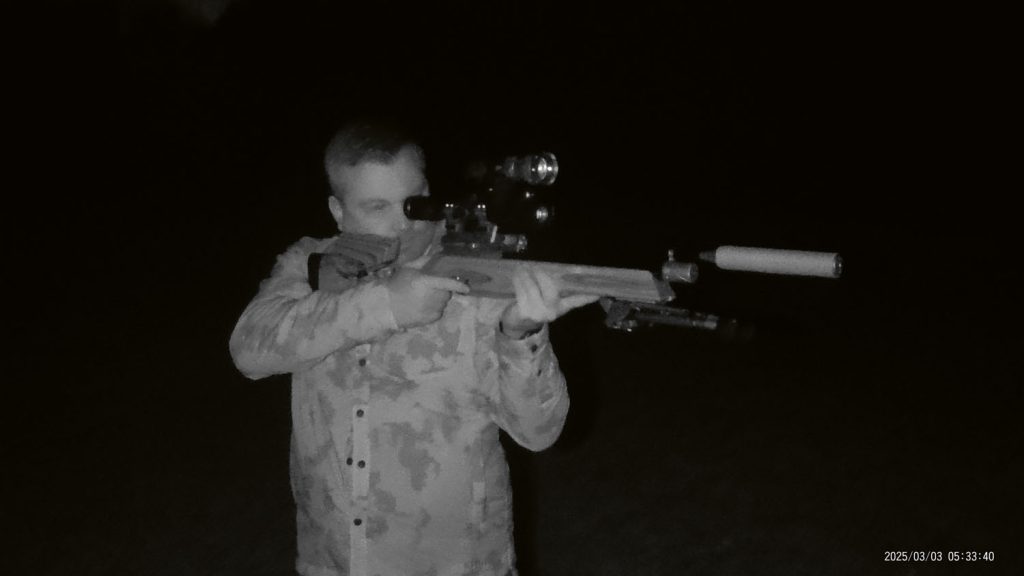
Modern equipment has transformed what’s possible after dark. A capable PCP, paired with digital night vision and subtle infrared illumination, allows us to work efficiently, safely and discreetly in environments where rimfire or lamping would be impractical. This article looks at a proven, real-world ratting setup: the Air Arms S510R Core, HIKMICRO 4K Lite and the WÜLF Fi IR LED 940nm illuminator, and how to use it effectively across farms, yards and waste sites without educating the rats faster than you can deal with them.
The importance of good fieldcraft
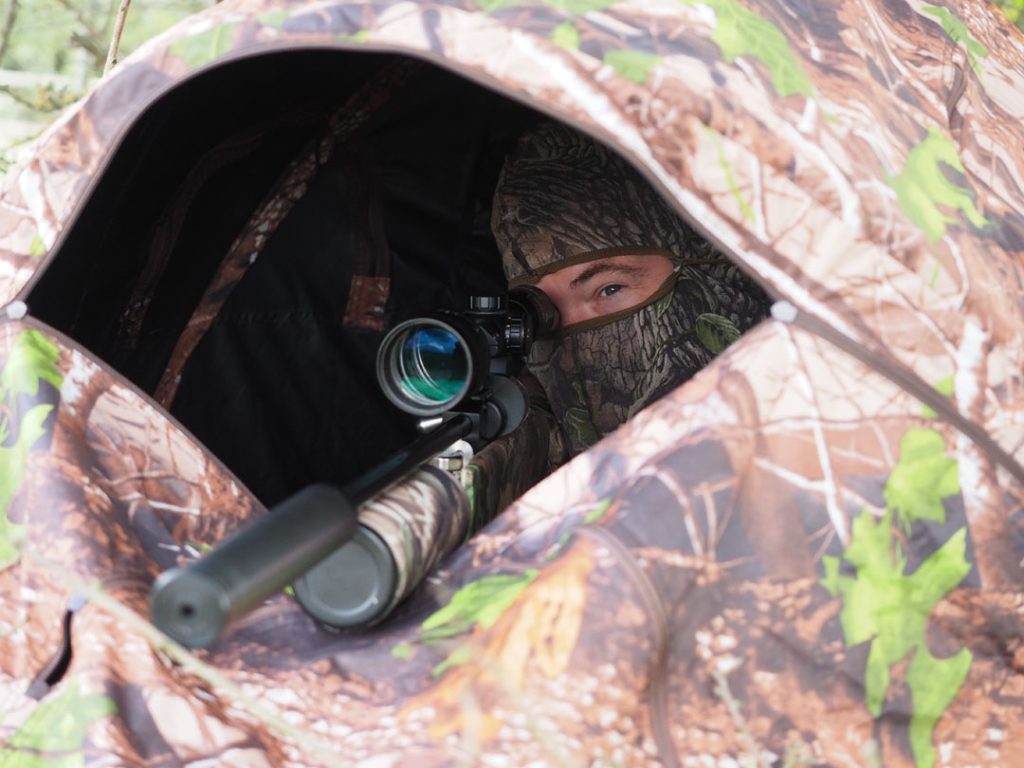
Unlike rabbits or pigeons, rats don’t tolerate pressure for long. Miss one, rush a shot or blunder into a yard too noisily and you can wipe out visible activity for hours. They’re quick learners. Successful ratting isn’t about turning up and shooting everything that moves; it’s about understanding how they use an area and inserting yourself into their routine with as little disruption as possible.
Why use 940nm IR for rat shooting?
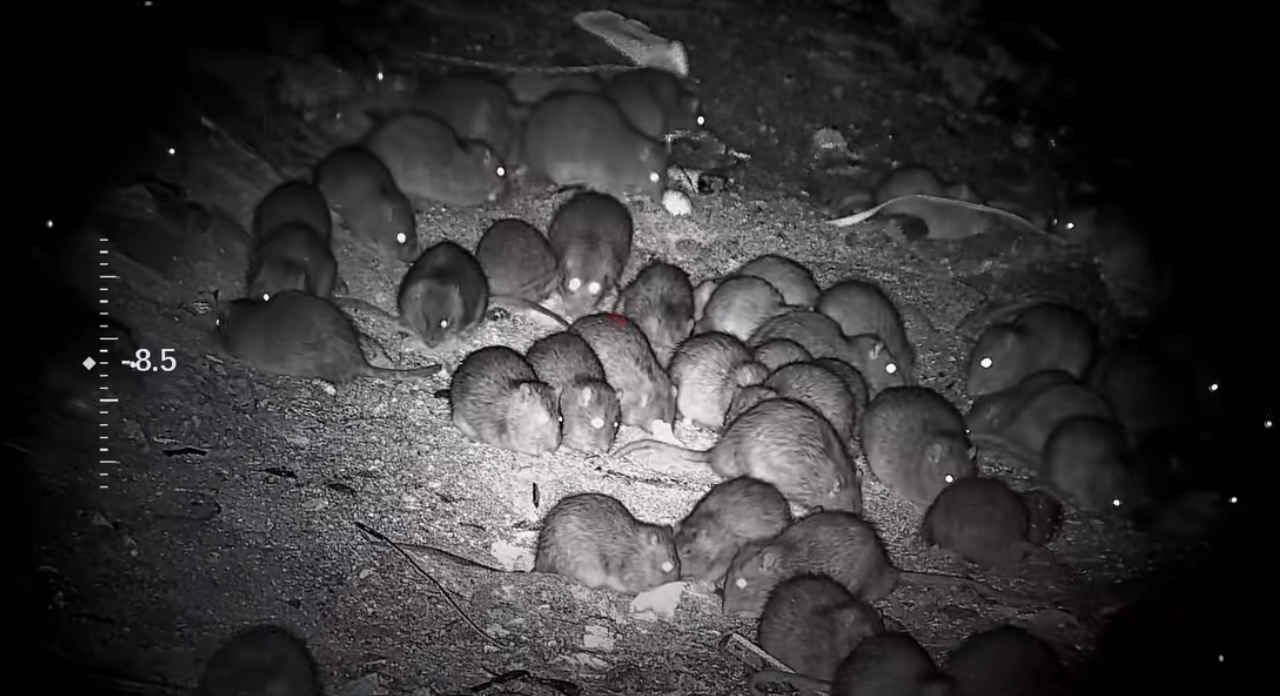
That’s where the right kit matters. The Air Arms S510R Core is well suited to this work. Its strengths are functional: a smooth firing cycle, consistent accuracy and fast follow-up shots are exactly what you want when rats appear briefly in pairs. Mounted on top, the HIKMICRO 4K Lite brings clarity to complex farmyards full of contrast and shadowed corners. Illumination is handled by the WÜLF Fi IR LED 940nm illuminator. Rats are far less likely to spook under 940nm infrared compared to visible light or 850nm wavelengths. Used sensibly, it identifies targets without advertising your presence.
When is the best time to shoot rats on a farm?
Ratting success often comes down to timing. On farms, the best window is usually once human activity has dropped away: after the last feed round and once machinery is parked. Waste sites vary depending on security patrols, but the principle is the same — rats move when they feel safe. Arriving too early and clattering gates is a reliable way to buy a very quiet night. A better approach is to arrive before dark, quietly assess the site, then settle in. Often, the first rat will appear exactly where you expected if you’ve done your homework.
Locating all of the habitat hotspots
Rats are motivated by food, cover and dry routes. On farms, feed stores and grain areas are obvious starting points. Look behind stacked bags, under pallets and along walls where runs form. Livestock sheds support large populations thanks to constant warmth. The most productive spots are usually the quieter edges: back walls and under raised platforms.
Silage clamps and hay barns offer dense cover. Rats will run tight along the base of these structures, emerging briefly to cross open ground. Muck heaps can be productive in colder months when warmth is a draw. Drainage ditches and culverts provide safe travel routes. These areas demand careful shot placement and absolute awareness of backstops, but they’re often worth the effort.
Waste and recycling sites bring challenges like reflective surfaces and harsh lighting. However, where food waste exists, rats follow. Skips and compactors are classic hotspots, especially underneath. Pallet stacks and timber piles provide nesting cover, while perimeter fencing acts as a rat motorway. Digital optics allow you to manage contrast and pick out movement without introducing visible light. The key is patience — let the rats commit to movement rather than trying to force shots.
How to use liquid bait for ratting
Baiting isn’t about feeding rats; it’s about controlling where they stop. A good bait station encourages a pause at a safe point with a reliable backstop. Strong-smelling, sticky baits work best. Peanut butter is aromatic and difficult for rats to “grab and run” with. Nutella is effective in cold conditions, while mushed sweetcorn is a familiar farm attractant.
Place bait sparingly on a solid surface tight to cover. Rats want an escape route within inches. If possible, pre-bait for a night or two without shooting to build their confidence. When using the HIKMICRO and WÜLF 940nm combination, restraint is key. Run only as much infrared as you need to avoid glare off wet concrete or metal.
Rather than staring at the bait, watch the edges: the gap under a door or the shadow line along a wall. Rats leak into view in pieces. Learning to read those early signs lets you prepare the shot rather than rushing. Recording sessions via your digital scope helps identify patterns: where they emerge and what causes them to spook.
Common ratting mistakes to avoid
The biggest mistake is over-pressuring a single spot. Clear a bait station hard and activity will shift just out of sight. Rotating locations and allowing areas to settle keeps rats moving naturally. Avoid silhouetting yourself against yard lights and keep movements slow. After a shot, stay still — the rest will often reappear if nothing else changes.
Effective rat control isn’t about one big night; it’s about reducing pressure steadily. A simple routine works best: survey the site, choose likely zones, bait carefully, return at the quietest time and adapt. With the Air Arms S510R Core delivering precision, the HIKMICRO 4K Lite offering clarity and the WÜLF 940nm illuminator keeping you discreet, you’re well equipped. Understanding your quarry — where it lives and how it moves — is the final piece of the puzzle. Do that, and the night shift becomes one of the most satisfying forms of pest control there is.
The WÜLF FI IR LED 940nm illuminator
This LED-based illuminator is a vital tool for nighttime vermin control, offering a high-contrast image for digital night-vision systems. Specifically engineered for covert operations, its 940nm wavelength provides a discreet light source invisible to the eyes of lamp-shy quarry.
The unit features a 54mm head with a 50mm aspheric lens, allowing shooters to transition from a tight spot beam to a wide flood. Weighing 270g and built on a 25mm body diameter, it integrates with standard mounts. Powered by a supplied 18650 battery, it delivers a one to three-hour runtime with simple single-mode operation.
This article contains affiliate links. If you click on one of these links and make a purchase, we may earn a small commission at no additional cost to you. Affiliate income helps us maintain the quality of our content and keep it freely accessible.
All recommendations are based on our honest opinions and thorough research.Would you like to appear on our site? We offer sponsored articles and advertising to put you in front of our readers.
Find out more.
If there’s one quarry that truly embodies the essence of traditional British airgun hunting, it’s the rabbit. They’re plentiful, alert and perfectly suited to the pest control skills of the thou...
By Danny Brookfield
Get the latest news delivered direct to your door
Subscribe to Airgun World
Unlock the world of airgun shooting with a subscription to Airgun World magazine, Britain’s biggest-selling airgun publication.
Written by passionate, long-term airgun enthusiasts, each issue delivers expert insights, comprehensive gear reviews, and invaluable tips to enhance your shooting skills. Whether you’re a seasoned shot or new to the sport, Airgun World offers essential content covering shooting techniques, classic airguns, and the latest equipment innovations.
Save on shop price when you subscribe and pay just £4.07 per issue – 42% cheaper than buying in-store at £6.99!
To provide the best experiences, we use technologies like cookies to store and/or access device information. Consenting to these technologies will allow us to process data such as browsing behavior or unique IDs on this site. Not consenting or withdrawing consent, may adversely affect certain features and functions.
Functional
Always active
The technical storage or access is strictly necessary for the legitimate purpose of enabling the use of a specific service explicitly requested by the subscriber or user, or for the sole purpose of carrying out the transmission of a communication over an electronic communications network.
Preferences
The technical storage or access is necessary for the legitimate purpose of storing preferences that are not requested by the subscriber or user.
Statistics
The technical storage or access that is used exclusively for statistical purposes.The technical storage or access that is used exclusively for anonymous statistical purposes. Without a subpoena, voluntary compliance on the part of your Internet Service Provider, or additional records from a third party, information stored or retrieved for this purpose alone cannot usually be used to identify you.
Marketing
The technical storage or access is required to create user profiles to send advertising, or to track the user on a website or across several websites for similar marketing purposes.