

But, as most seasoned airgunners will admit, those perfect days are the exception rather than the rule. More often than not, something goes wrong. Birds flare at the last second, ignore the pattern entirely or simply never show in the numbers you’d hoped for.
It’s easy to blame luck, but in reality, pigeon decoying is a game of fine margins and small mistakes can have a big impact.
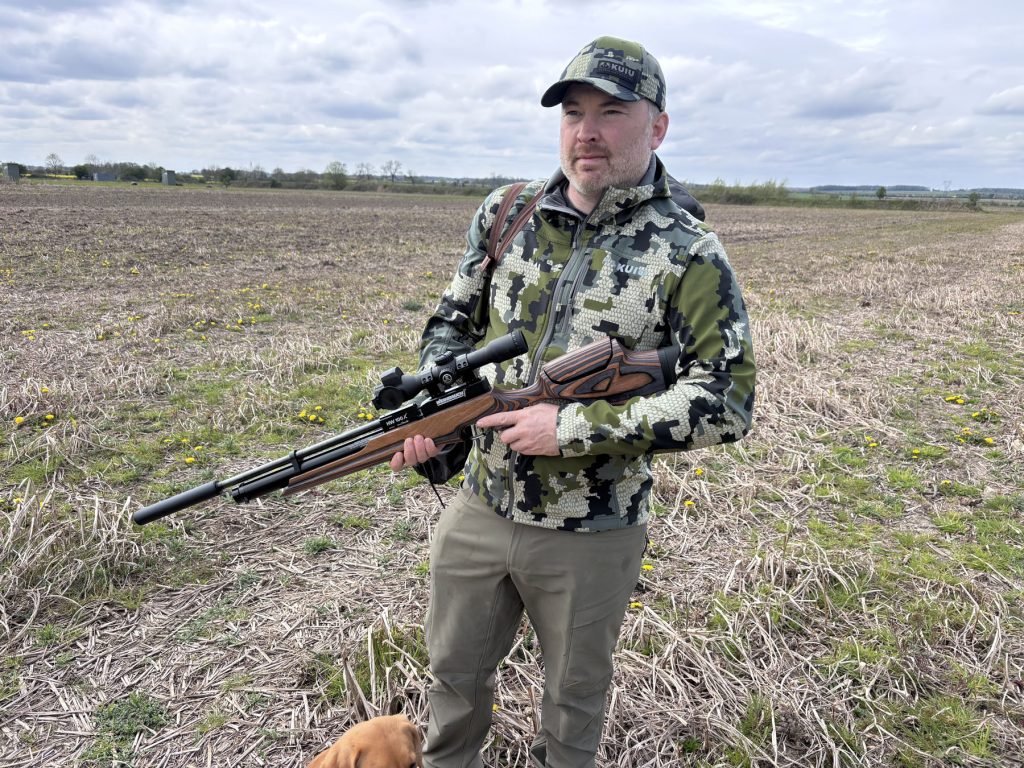
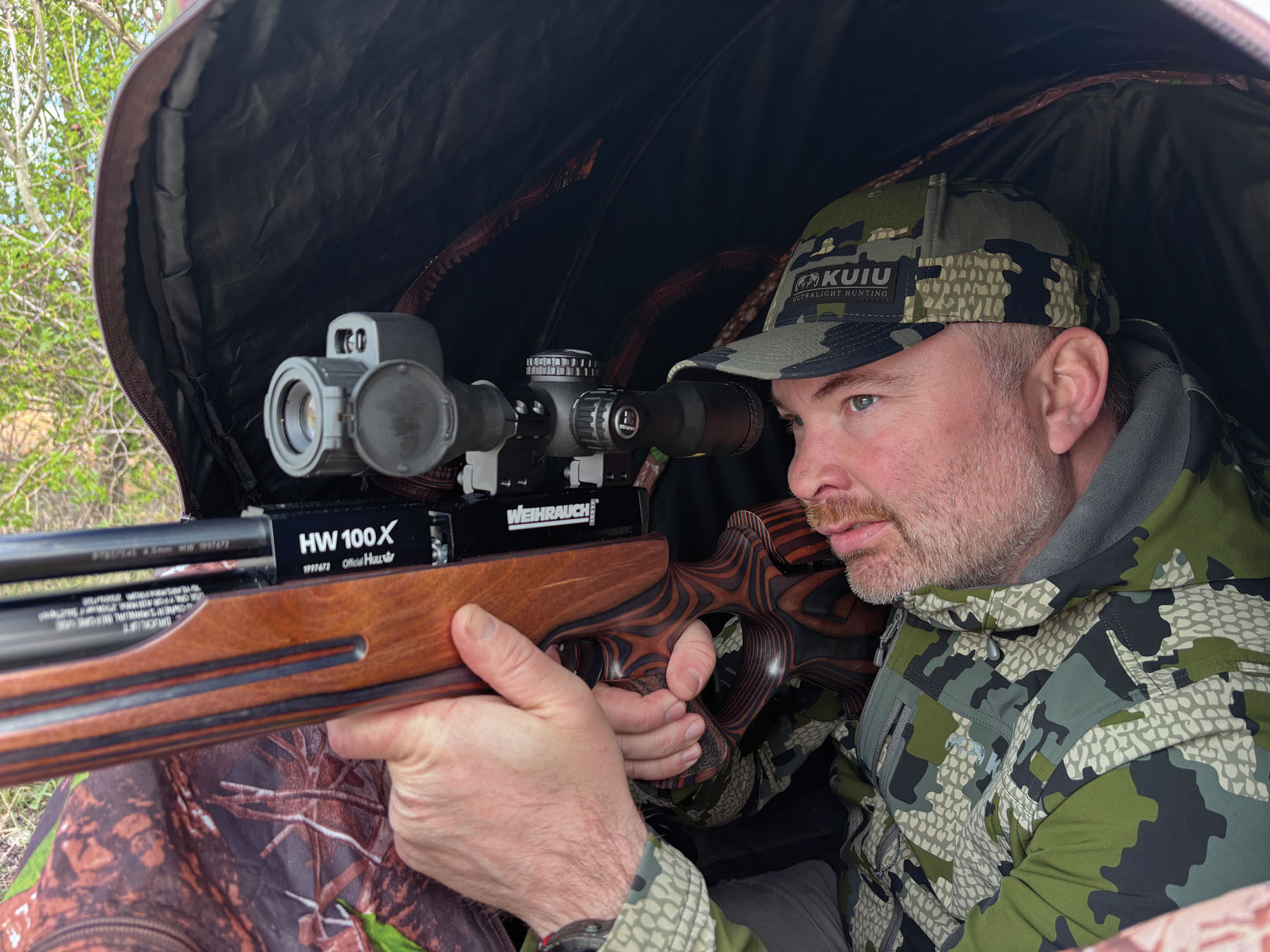
After many sessions in the hide, often armed with my Daystate Huntsman Revere in .20 calibre or, more recently, the ever-reliable HW100X KT in .177, I’ve come to realise that success is less about what you do right and more about what you avoid getting wrong.
The importance of reconnaissance
The biggest mistakes are often made long before the first decoy is placed.
Too many outings begin with assumption rather than observation. A field that held birds yesterday may be barren today. Crops are grazed out quickly, feeding preferences change and pressure from other shooters or farm activity can shift pigeon movement overnight. Turning up to a field and setting out a pattern without proper reconnaissance is, more often than not, a waste of time.
Successful decoying begins with watching. Not just a quick glance from the gate, but proper time spent studying flightlines, entry points and, crucially, where birds actually want to land. There’s a world of difference between pigeons flying over a field and pigeons feeding in it.
Perfecting your hide position
Even with birds in the area, poor positioning can undo your chances before you’ve even settled into the hide.
A common error is setting up where it suits the shooter rather than where it suits the pigeons. Being “close enough” to the action rarely is. If your decoy pattern isn’t placed in the birds’ preferred feeding zone, they’ll simply bypass it.
Wind direction
Wind direction adds another layer of complexity. Pigeons almost always land into the wind, and if your pattern doesn’t allow for that natural approach, birds will often hesitate, circle and, ultimately, drift away. Getting this right is fundamental. When it’s wrong, no amount of clever decoy placement will fully compensate for it.
Effective pigeon decoy patterns
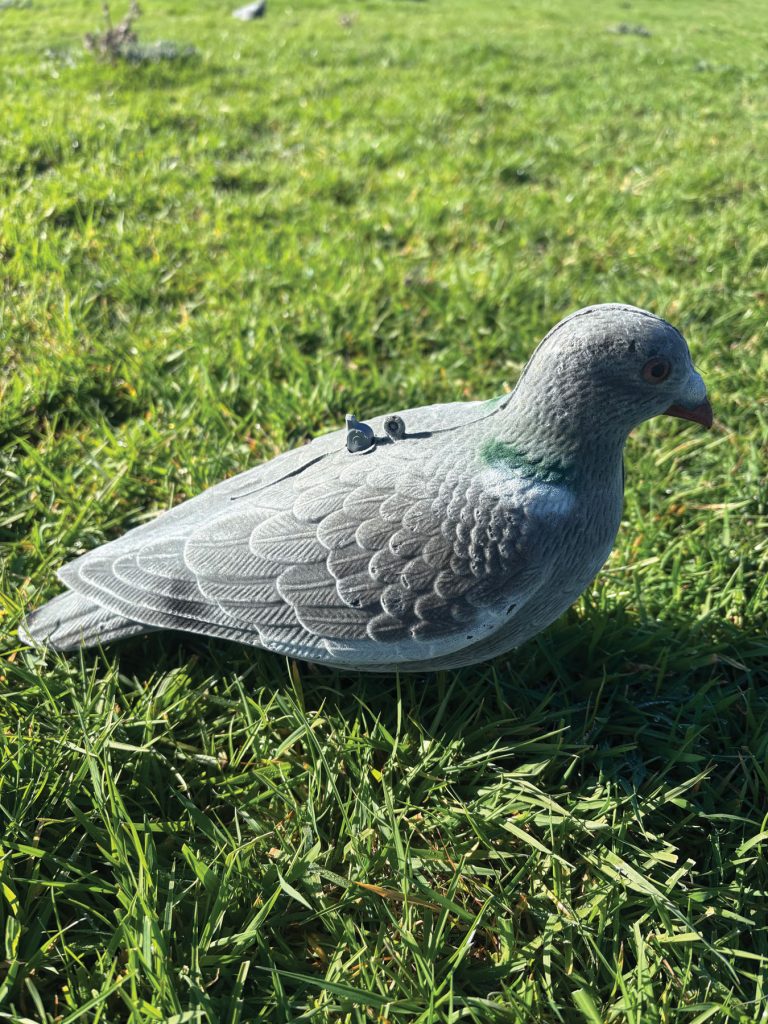
A decoy pattern should tell a simple story: that pigeons are feeding safely and confidently. Yet it’s surprising how often that message gets muddled. Patterns that are too neat, too dense or lacking a clear landing area can look unnatural. Likewise, decoys that are dirty, poorly positioned or facing the wrong way can raise suspicion.
Pigeons might not analyse things in human terms, but they are highly attuned to what looks right— and, more importantly, what doesn’t.
One of the most common issues is overcrowding. There’s a temptation to put out every decoy you own, but this can have the opposite effect. A smaller, well-spaced pattern with a defined landing pocket is often far more effective.
Introducing movement into a decoy setup can transform a quiet day into a productive one, but it has to be done carefully.
A well-placed flapper or rotary can draw birds from a distance and give them the confidence to commit. However, poorly executed movement can spook pigeons just as quickly. Devices set too high, spinning too fast, or positioned unnaturally stand out for all the wrong reasons. Like most aspects of decoying, subtlety tends to win.
Fieldcraft and concealment
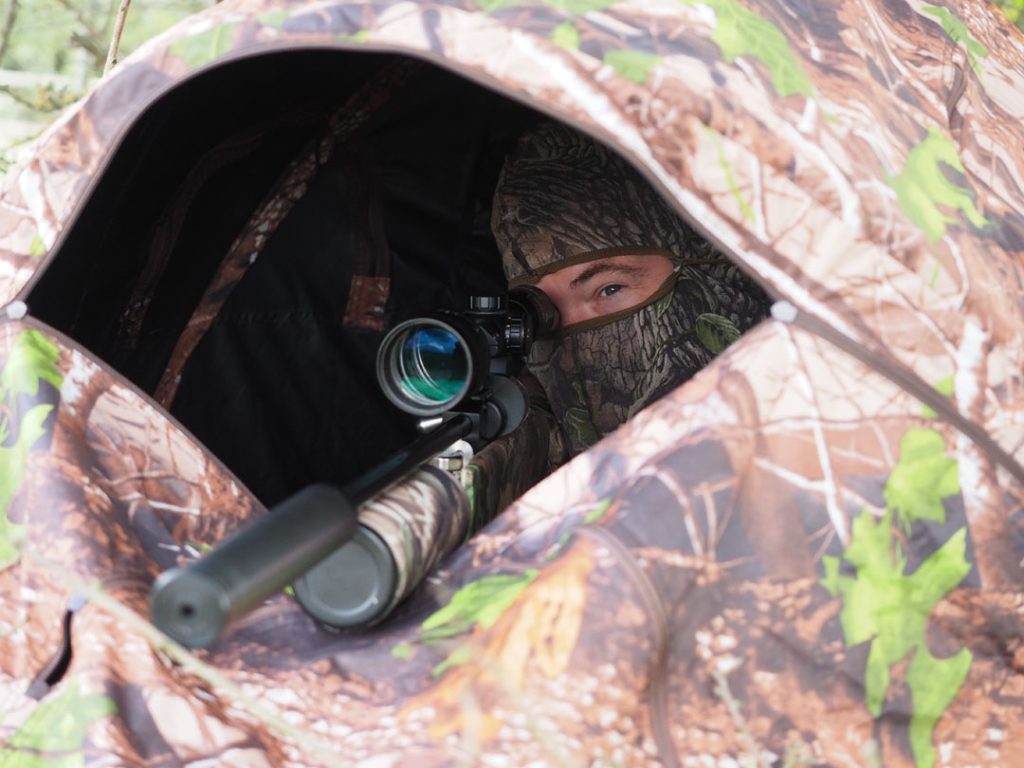
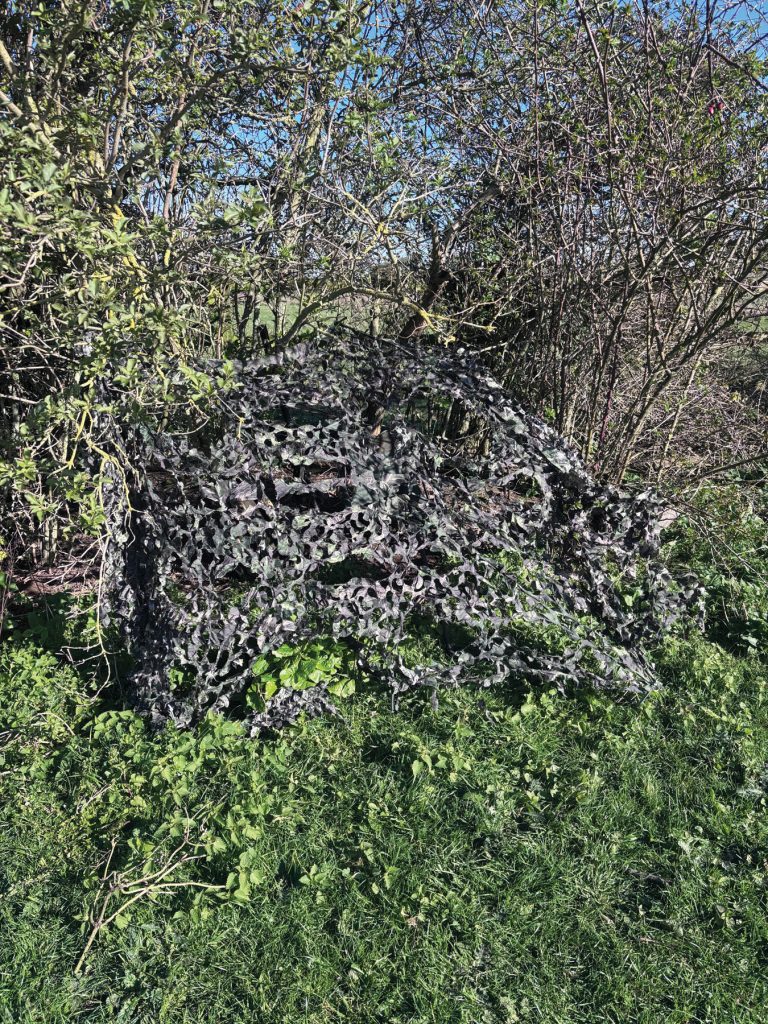
No matter how good your decoy pattern is, it won’t matter if you’re easily seen. Pigeons have exceptional eyesight, and a poorly constructed hide is one of the quickest ways to educate them. Gaps in netting, unnatural shapes and failure to blend into the surroundings all contribute to birds flaring at the last moment.
Even when the hide itself is sound, movement within it can give you away. A face catching the light, a hand moving too quickly or the outline of a rifle shifting at the wrong moment is often all it takes. Good concealment isn’t just about materials, it’s about discipline.
Shot placement and calibre choice
One of the great appeals of decoying is the opportunity for relatively close-range shooting. But that can also be its downfall.
When birds come in quickly, it’s easy to rush. Shots are taken too soon, positions are hurried and trigger control suffers. The result is missed chances or, worse, poorly placed shots.
This is where confidence in your rifle makes a real difference. Rifles like the Daystate Huntsman Revere in .20 calibre offer a beautifully balanced combination of accuracy and downrange authority, while the HW100X KT in .177 provides a flatter trajectory that can be very forgiving at typical decoying ranges. But even the finest equipment can’t compensate for rushed shooting. Clean, ethical kills still depend on patience and precision.
Range estimation and knowing your equipment
Judging distance in the field is rarely as straightforward as it seems.
A pigeon dropping into the pattern may appear well within range, but slight changes in elevation or angle can be deceptive. Shooting just beyond your effective range with an airgun often leads to poor results.
Knowing your rifle’s capabilities is essential. Whether you favour the slightly heavier impact of a .20 calibre or the flatter flight of a .177, understanding pellet trajectory and energy at different distances is critical. Guesswork simply has no place here.
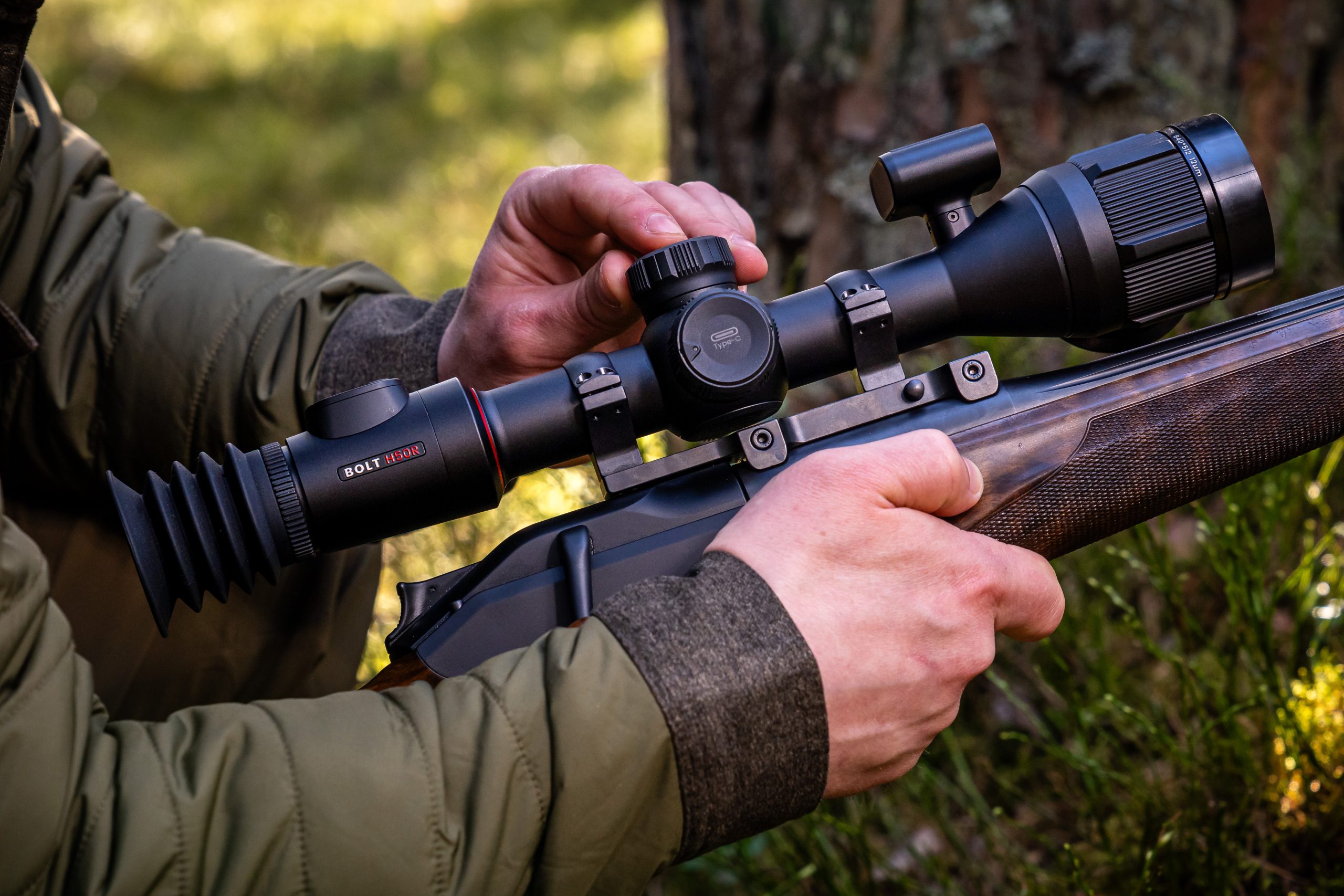
Even the best-laid plans can be undone by equipment issues. A scope that’s lost its zero, loose mounts, inconsistent pellets or simply running low on air pressure can all turn a promising session into a frustrating one.
These are easily avoidable problems, yet they still catch shooters out. Pre-session checks should be second nature. Confidence in your equipment allows you to focus fully on the task at hand.
Managing pressure and environmental factors
Modern pigeon shooting rarely takes place in isolation. On many permissions, birds are subjected to regular pressure from other shooters, farming activity or both. Over time, pigeons become wary.
They circle wider, commit less readily and are far quicker to spot anything out of place. If a field has been heavily shot, even a well-executed setup can struggle to produce results.
Recognising when to move on or when to leave a spot to rest is an important part of long-term success.
Two factors that are often underestimated are weather and timing. Pigeons respond quickly to changing conditions. Wind strength and direction, light levels and even temperature can all influence feeding behaviour. A setup that works perfectly one day may fail completely the next under different conditions.
Timing is equally important. Arriving too late can mean missing the main feeding window, while setting up too early without confirmed activity can lead to long, unproductive waits. The most successful outings tend to align preparation with pigeon behaviour, rather than working against it.
Patience in the hide
Perhaps the most overlooked factor of all is patience.
Pigeon decoying isn’t always fast-paced. There are often long quiet spells between bursts of activity, and it’s easy to lose confidence in your setup. Constantly adjusting the pattern, moving position or packing up too early can do more harm than good. If your groundwork is solid, it’s often better to sit tight and let things develop.
When pigeon decoying goes well, it can feel effortless. But behind those successful days lies a careful balance of observation, planning and execution.
When it goes wrong, and it inevitably will, the reasons are usually there to be found. A slight misjudgement in positioning, a flaw in the pattern, a moment of unnecessary movement; small details that make a big difference.
The key is to recognise them, learn from them and refine your approach. In pigeon decoying, success isn’t just about doing things right, it’s about avoiding the many ways they can go wrong.