Pixfra Volans V850 LRF digital 4K day and night scope review
At £639.95 the Pixfra Volans V850 LRF digital 4K day and night scope is a sizable investment but it more than repays it with strong performance and high-end features
The Keck Precision HD is a "feature-heavy" powerhouse that challenges much more expensive rivals. While the Zero-Stop takes some minor mechanical tinkering to suit airgun loops, the optical clarity and repeatable turret tracking make it an outstanding choice for both hunters and target shooters on a budget
I was first acquainted with the Keck Optics scope brand back in the August 2025 issue, where its Breeze FFP scope left a favourable impression on me.
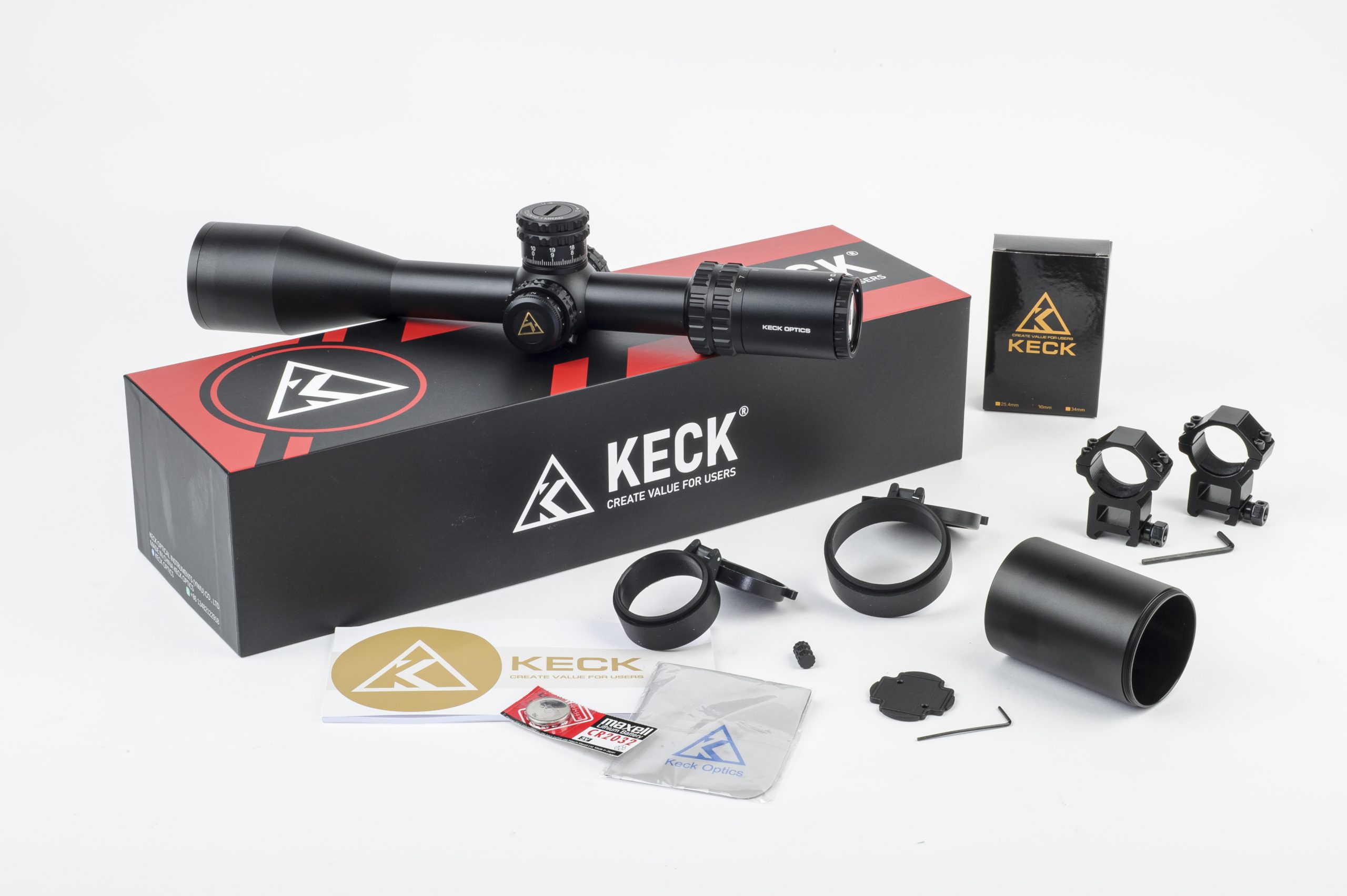
I was therefore excited when the SFP IR version of its 6-24×50 Precision HD model arrived for test – especially given its asking price of just £229.99, inclusive of mounts and a sunshade. That’s not half bad for a super-zoom telly!
Keck’s “Create Value For Users” byline is a mantra that’s always going to resonate well with airgunners, though its Precision HD line is not just suitable for use on spring-powered and PCP hardware.
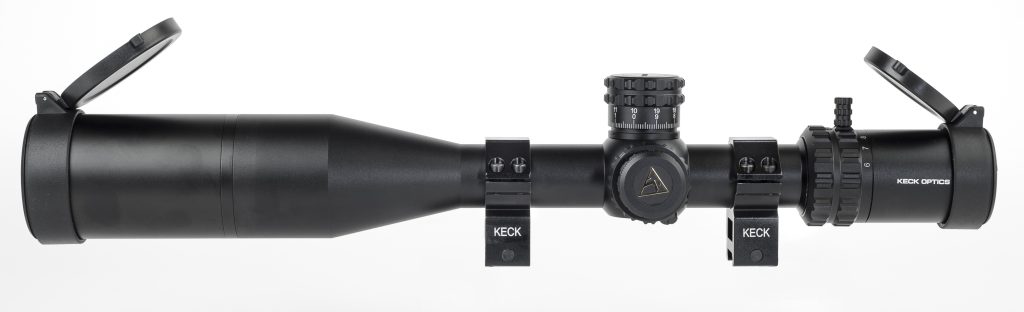
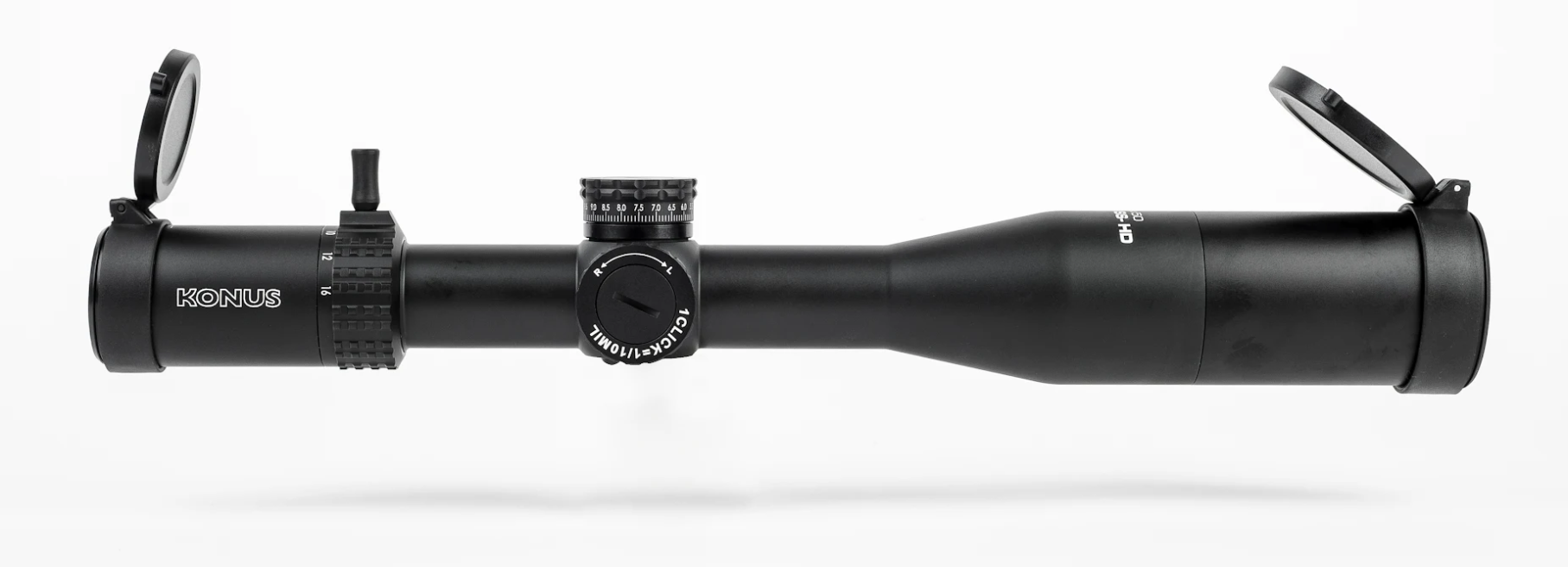
Shockproof to withstand firearm recoil, its 30mm, one-piece tube is made from T7074 aluminium. It’s also rated to IPX7 for water resistance and, upon close inspection, appears very robustly built from objective to ocular. My bet is that whatever gun you mount it on, it’ll stand the test of time.
My test regimen starts with optical performance tests and, as was the case with the Breeze model, this Precision HD sample matched or bettered my expectation in every category. Keck may be a relatively new brand and this model comparatively cheap for a high-magnification scope, but a poor performer it certainly is not.
As is indicated by its Precision HD moniker, it’s this model’s glassware that’s likely to tempt potential buyers. After weeks of testing, I can confirm its fully multi-coated, high-definition lenses deliver not just on the test card, but also out in the field.
While its sight picture won’t match the quality of a £500-plus riflescope, I was never left wanting in any of my shooting scenarios.

The sun was pretty low on the horizon during my test period, and light levels were at their yearly lowest, too. Nonetheless, the Keck’s 50mm diameter objective pulled in enough light to keep the sight picture nice and bright.
There were some occasions when I needed to screw on the supplied sunshade to cut down glare – but at least one came in the box, gratis. And there were times that Keck’s well-presented G1 reticle needed illuminating to cut through the murkiness. But, again, I had it instantly to hand with this being the “IR” model.
The central section of the G1’s hanging, etched crosshair has a six-level illumination, operated via the outer ring of the left-hand turret. Handier still is the fact that you only have to turn it one notch between your preferred intensity and “off”, should you ever wish to preserve battery power.
Everything about this scope seems well thought-out from a shooter’s perspective. It comes with flip-up lens caps that are speedy to deploy and practical. Additionally, there’s a quick-focus eyepiece to set the reticle sharpness to best suit your aiming eye.
One included feature that I really came to appreciate was the zoom-ring throw lever. Although the magnification ring is serrated and offers a good grip even if you’re wearing shooting mitts, with the throw lever screwed into place, the zooming procedure is even easier.
And what a zoom span, too. Despite the scope’s relatively short length, you can magnify your target from 6x size to a whopping 24x – which is akin to having it sit on the end of your barrel! Of course, it’ll also magnify your wobble, so not everyone will want – or be able – to shoot at such high magnification.
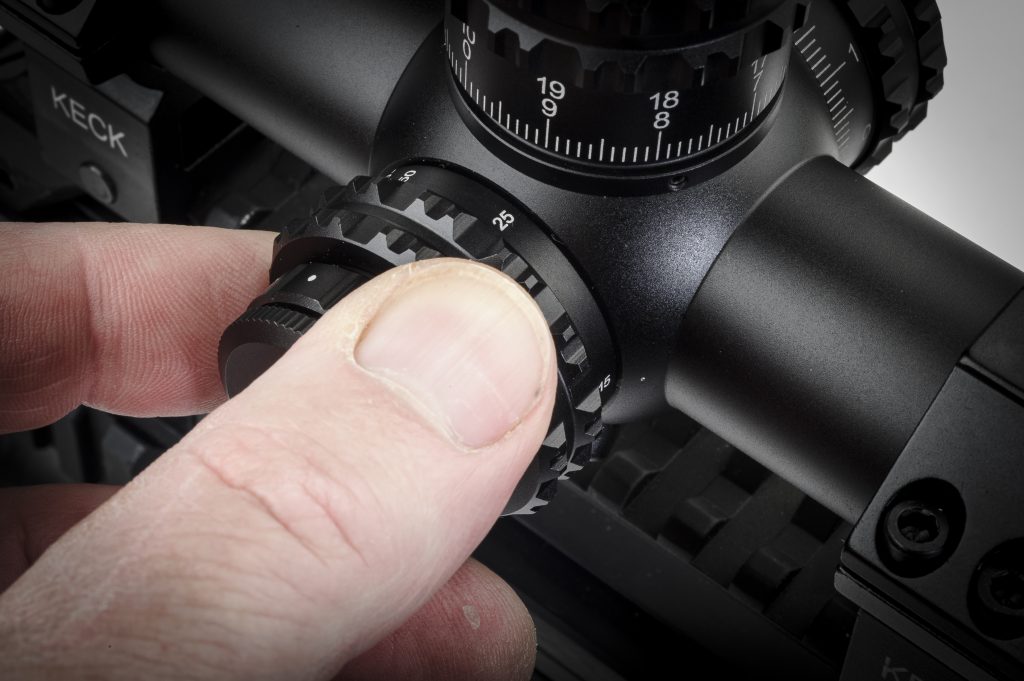
However, when used in conjunction with the side-mounted parallax adjustment wheel, 24x power assists your range-finding capabilities with surprising accuracy.

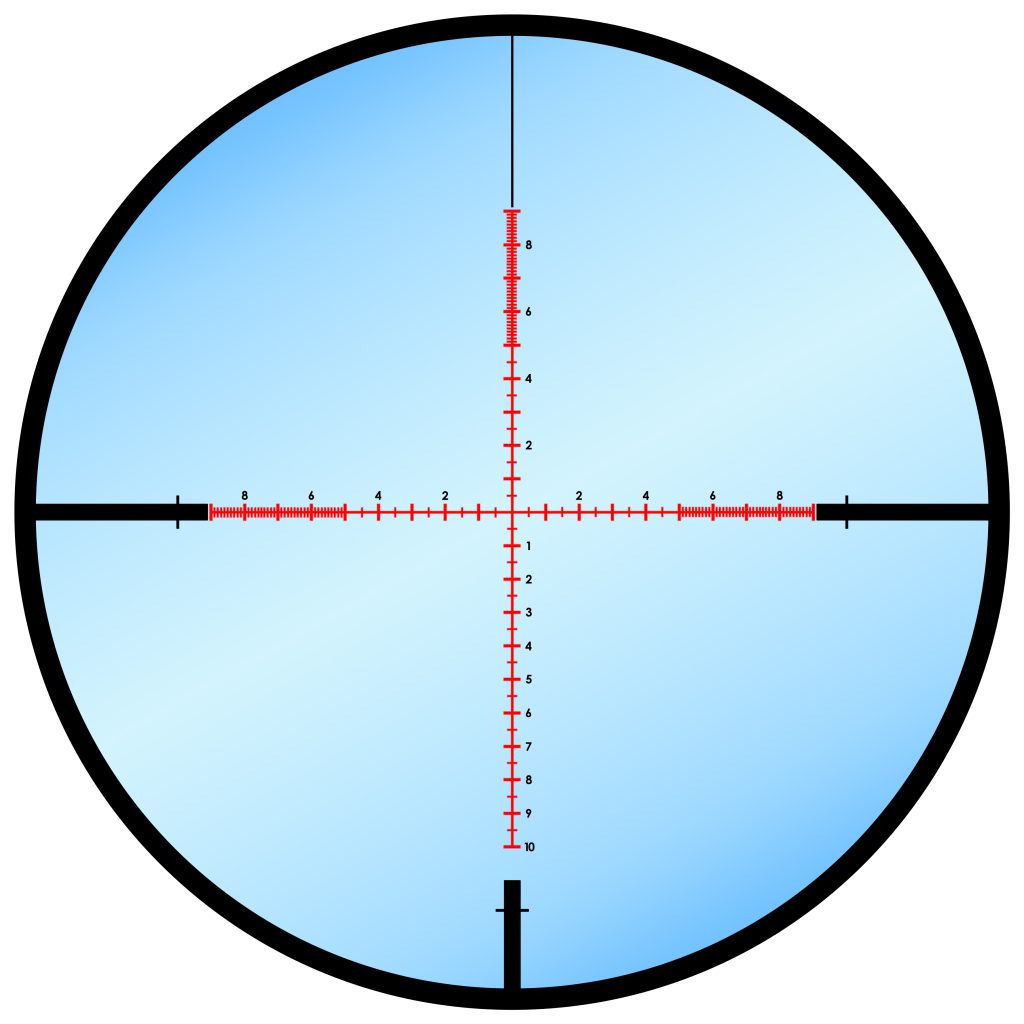
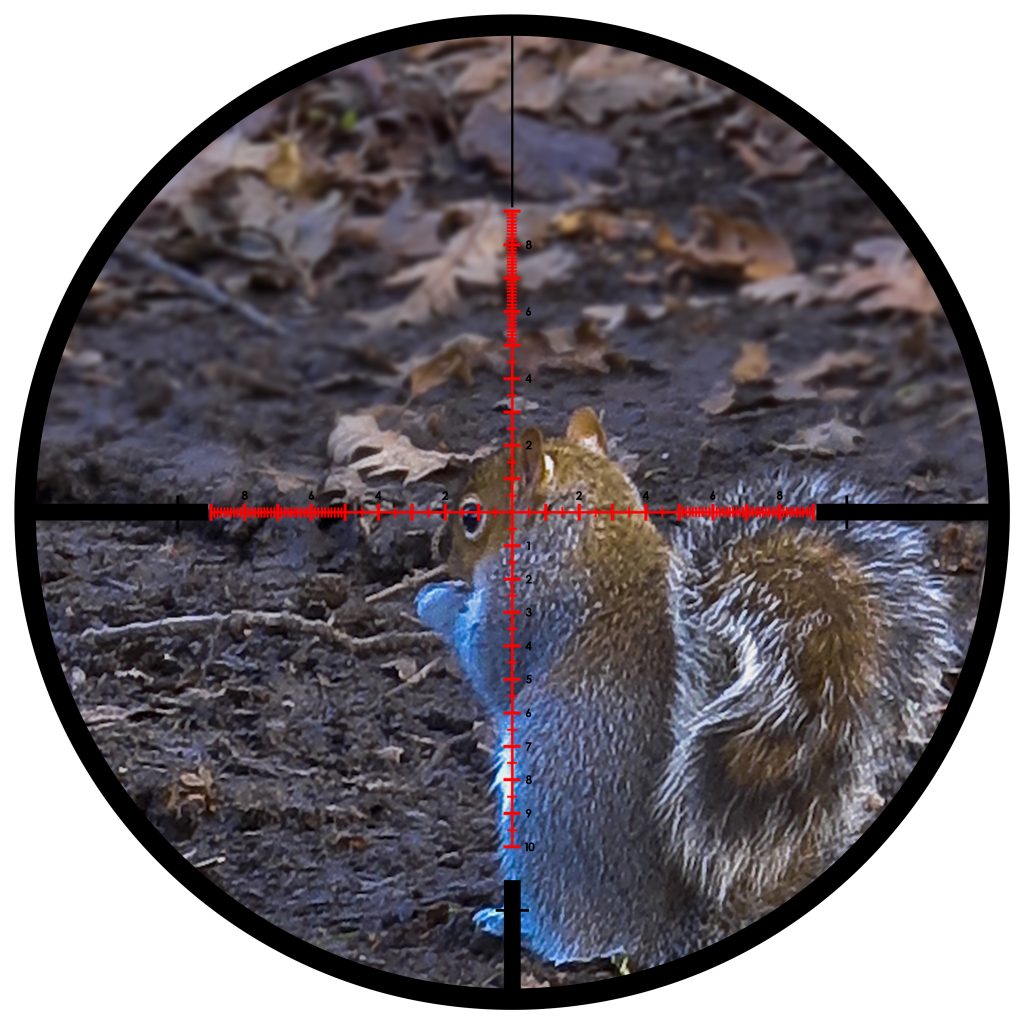
Keck Optics’ glass-etched G1 multi-stadia crosshair can also be used for estimating distance using the “bracketing” method, though this is probably not as easy and is best done at 10x magnification. So, I’d recommend you use it purely for aiming purposes, especially if you like to aim off.
The important thing to remember is that because it’s a second focal plane crosshair, the relationship between the target and stadia changes according to the scope’s magnification. In other words, subtend number “5” of the lower quadrant will reflect a different amount of pellet drop with the scope set at 6x than it would with the scope set at 12x.
If this all sounds a bit confusing, then rather than aiming off, you could use the “dialling-in” method, adjusting the elevation and windage turrets such that you always aim dead centre. Here, again, the Keck gives you lots more than “just” an everyday adjuster.
Firstly, the click-stops for both the elevation and windage turrets are 0.1MRAD – equivalent to one click altering the point of impact (POI) by 10mm at 100m, 5mm at 50m, 2.5mm at 25m and so on.
The turrets’ verniers are marked in tenths, with each turret rotating 100 clicks per revolution. The right-hand, windage turret sports a locking system to avoid inadvertent zero loss; simply pull it out to adjust and push it in to lock the setting. Both turrets’ verniers can be set to reflect “0”, too.

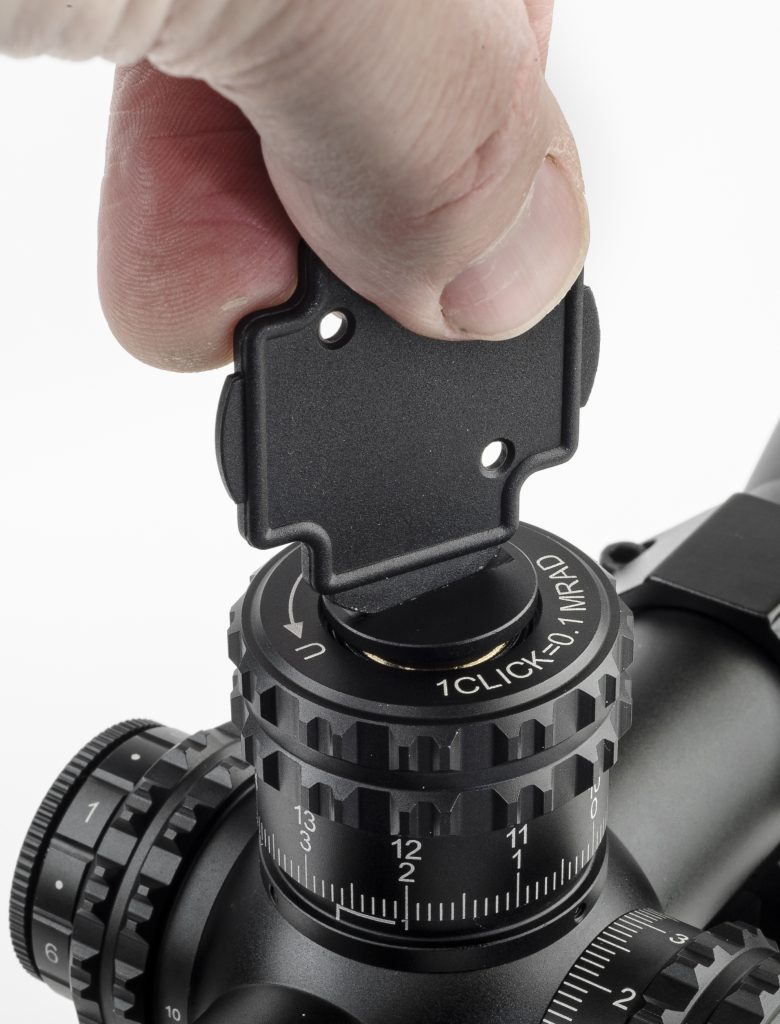
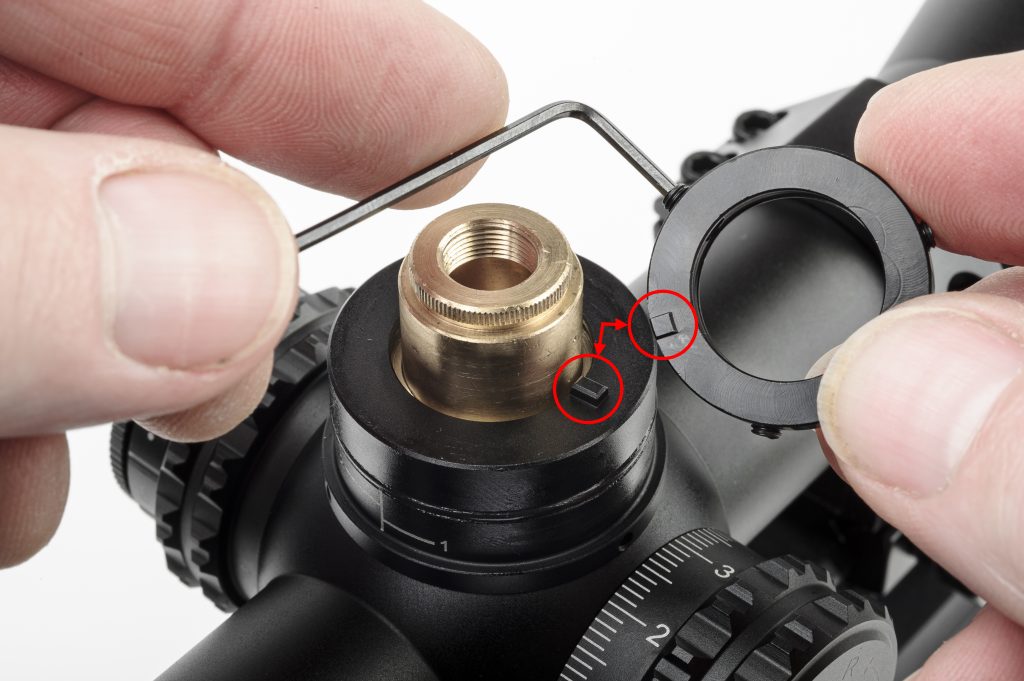
And as if that’s not enough, the Precision HD’s elevation turret comes with a Zero-Stop mechanism. While this limits the turret’s rotation range, its function is to allow you to quickly spin the turret back to its “0” point without overshooting the mark.
I’ll be honest here: I’m not sure Zero-Stop suits airgunners’ needs – at least not those of us who shoot the sub-12ft/lb stuff. Our guns are low powered, with quite a lobbed trajectory, so we frequently need to aim lower for targets that are closer than our primary zero distance.
In practice, airgunners should set a scope’s Zero-Stop to the lowest point their set-up requires on the vernier. Alternatively, you can do what I did… and remove the thing altogether!
Besides some really, really tough range and field days, conditions-wise, I tested the Precision HD on both a PCP and my mate’s FAC-rated Weihrauch HW80. The latter kicks like a mule, yet despite vigorous spinning of the turrets, the Keck always returned to its original zero.
While I found the extreme ends of the G1’s crosshair a little too close to decipher, its all-important central area suited my individual shooting requirements very well indeed. This may only be the second model from Keck Optics that I’ve used, but it’s “so far, so good” for me. Compact, well finished and well engineered, it offers incredible value for money.

As with its many other reticle designs, Keck Optics’ G1 is very practical, with my test model’s being the IR – or “illuminated reticle” – version. It lights up by rotating the outer dial on the left turret, with six intensities (marked 1-6) to suit the target background or lighting conditions. Between each brightness level, the scope reverts to the standard black crosswires.
The G1 is designed around full- and half-MIL reference points, though these milliradian spacings are only “true” when the scope is set to 10x magnification. Some of the subtends are numbered and while these numbers don’t illuminate, they certainly help you keep track of where you’re aiming.
The outer crosswires are split into what looks like 0.1MILRADs, though they’re so fine, their use offers no real practical benefit. In practice, however, when making aiming allowances for hold-over/ -under and windage, I found the G1 generally quick and uncomplicated for fast target acquisition.
Because Keck sets its G1 reticle in this scope’s second focal plane (SFP), only the size of the target changes as you zoom through the magnification range; the crosshair’s size stays constant.

High-magnification scopes require a parallax adjustment (P/A) system to avoid aiming errors due to inconsistent eye alignment with the ocular lens. The bonus is that you can use it for quite accurate range-finding, too.
Simply wind up the scope to 24x, which will likely render the sight picture very blurred, and then turn the P/A wheel until your target pings into crisp focus. Then read off the range from the sidewheel’s vernier. You may want to add your own distance markings, but you’ll be surprised as to how accurate this system can be!
For the ultimate in distancing accuracy, Keck also offers a 75mm diameter sidewheel as an optional extra.

Make: Keck Optics
Model: Precision HD 6-24×50 SFP IR riflescope
Magnification: Variable, 6x to 24x (stepless)
Objective: 50mm diameter, HD fully multi-coated
Tube diameter: 30mm, one-piece T7075 aluminium
Mounts supplied: Two-piece, Picatinny clamp
Reticle: G1 – glass-etched, second focal plane
Illumination: Yes (on IR model), with six intensities
Parallax adjustment: Sidewheel, <10 yards to infinity (marked in yards)
Turret adjustment: 0.1 MRAD (10mm @ 100m) – 10 MRAD per revolution
Elevation: Total of 246 click range; 123 click range with Zero-Stop mechanism engaged)
Windage: Push/ Pull locking, with 220 click range
Focus: Quick-focus, +/-2 dioptre
Eye relief: 96 – 95mm (6x – 24x)
Field of view @100 yards: 6.3 yards (6x) / 1.6 yards (24x)
Length: 352mm
Weight: 795g (excl. mounts)
Extras included: Picatinny two-piece mounts, threaded zoom throw lever, flip-up lens covers (opaque), 75mm screw-on sunshade, hex and scope key tools, lens cloth, CR2032 battery, user manual, five-year warranty (online extendable to lifetime in UK)
Optional extras: 75mm sidewheel (£14.99)
SRP: £229.99
Websites: keckoptics.co.uk / sureshot-airguns.co.uk
Get the latest news delivered direct to your door